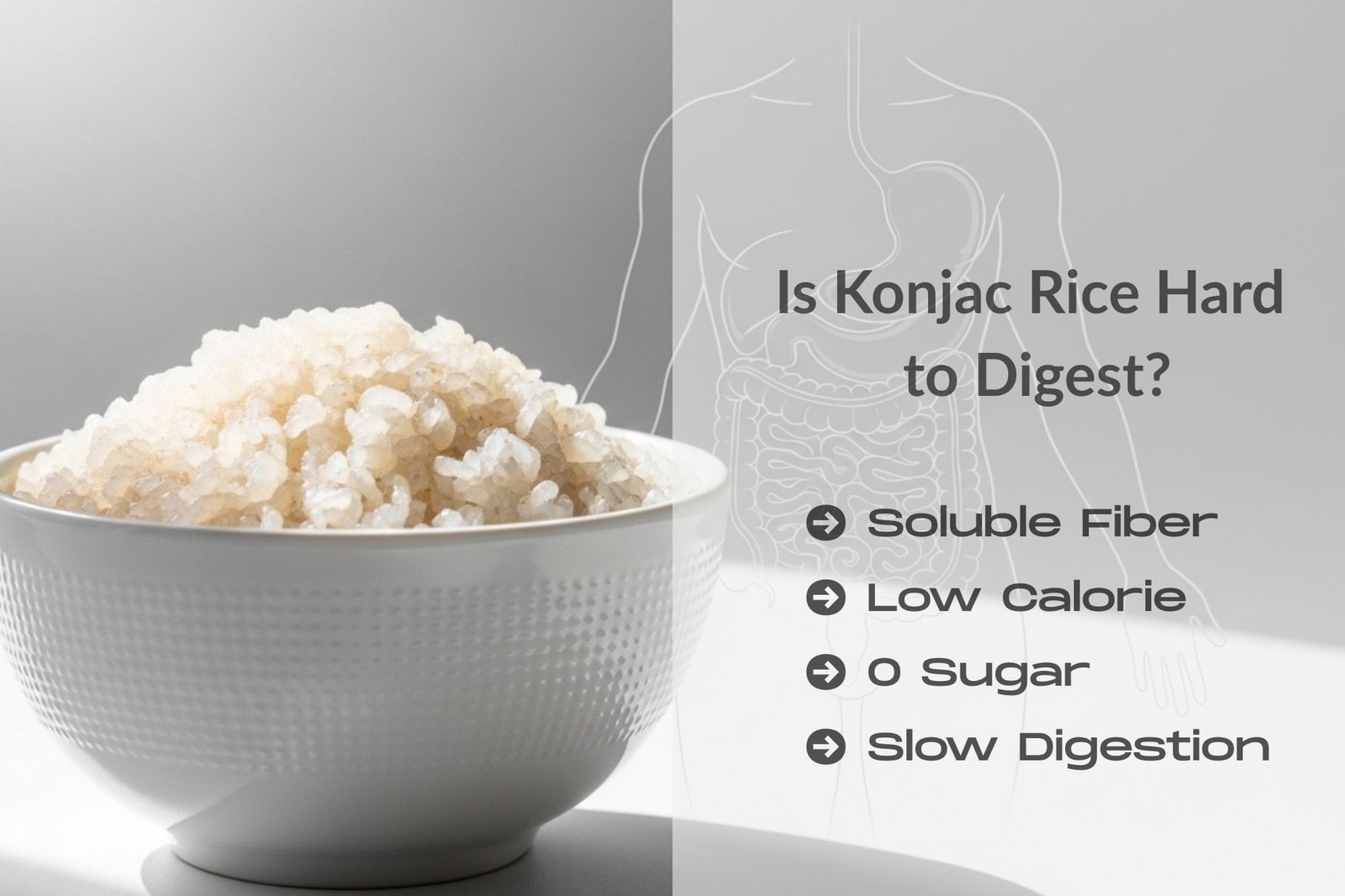
Schnelle Antwort: Konjak-Reis ist nicht schwer verdaulich für die meisten gesunden Erwachsenen. Obwohl er sich aufgrund seines hohen Ballaststoffgehalts anders verhält als normaler Reis, ist er für das Verdauungssystem leichter zu verdauen, als viele Menschen denken. Dieser Leitfaden bietet evidenzbasierte Antworten auf all Ihre Fragen zur Sicherheit und Verdaulichkeit von Konjakreis.
Inhaltsverzeichnis ausblenden
Was ist Konjac-Reis?
Konjak-Reis (auch bekannt als Shirataki-Reis oder Wunderreis) wird aus der Wurzel der Konjakpflanze (Konjakknolle), der in Asien seit über 1 500 Jahren konsumiert wird.
Wichtiges Nährwertprofil:
- Kalorien: 5-10 pro Portion (100g)
- Kohlenhydrate: <1g Netto-Kohlenhydrate
- Faser: 3-4 g Glucomannan
- Fett: 0 g
- Protein: 0 g
Aktiver Hauptbestandteil: Glucomannan
Glucomannan ist ein natürlicher löslicher Ballaststoff, der:
Absorbiert bis zum 50-fachen seines Gewichts an Wasser
Bildet bei Hydratation eine gelartige Textur
Verlangsamt die Magenentleerung für ein längeres Sättigungsgefühl
Unterstützt einen gesunden Cholesterinspiegel
Hilft bei der Regulierung des Blutzuckers
Moderner Konjac-Reis Zusammensetzung:
- 95-97% Wasser
- 3-5% Glucomannan-Faser
- Geringe Mengen Calciumhydroxid (lebensmittelechtes Festigungsmittel)
Was ihn von normalem Reis unterscheidet:

| Komponente | Normaler Reis | Konjac-Reis |
|---|---|---|
| Hauptbestandteil | Stärke | Glucomannan-Faser |
| Verdaulichkeit | Enzymatischer Abbau | Bakterielle Fermentation |
| Auswirkungen auf den Blutzucker | Hoch glykämisch | Keine Auswirkungen auf den Blutzuckerspiegel |
| Kalorien | 350 pro 100g | 5-10 pro 100g |
| Sättigung | Kurzfristig | Langlebig |
Verdaulichkeit - Wissenschaft erklärt
Ist Konjac-Reis tatsächlich schwer verdaulich?
Kurze Antwort: Nein - aber es funktioniert anders als bei stärkehaltigen Lebensmitteln.
Wie normaler Reis verdaut wird:
- Magen: Mechanischer Zusammenbruch
- Dünndarm: Enzyme wandeln Stärke in Glukose um
- Absorption: Schnelle Aufnahme von Glukose in den Blutkreislauf
Wie Konjac-Reis verarbeitet wird:
- Magen: dehnt sich mit Wasser aus, erhöht das Sättigungsgefühl
- Dünndarm: Geht weitgehend intakt durch (keine menschlichen Enzyme können Glucomannan abbauen)
- Dickdarm: Nützliche Bakterien fermentieren die Ballaststoffe teilweise
- Ergebnis: Produziert kurzkettige Fettsäuren (SCFAs), die der Darmgesundheit zugute kommen
💡 Wissenschaftliche Einblicke: Glucomannan wird eingestuft als präbiotische FaserDas bedeutet, dass es nützliche Darmbakterien ernährt, anstatt im herkömmlichen Sinne "verdaut" zu werden. Dieser Prozess ist tatsächlich einfacher für Ihr Verdauungssystem als die Aufspaltung komplexer Stärkearten.
Klinische Nachweise zur Verdaulichkeit:
Forschungsergebnisse:
- Japanese Journal of Nutrition (2018): 95% der Teilnehmer hatten bei täglichem Konjakkonsum keine Verdauungsbeschwerden
- Europäische Zeitschrift für klinische Ernährung (2020): Glucomannan wurde besser vertragen als andere lösliche Ballaststoffe
- American Journal of Gastroenterology (2019): Keine signifikante Belastung der Verdauung bei gesunden Erwachsenen, die 3-5 g täglich konsumieren
Häufige Nebenwirkungen und Lösungen
Warum haben manche Menschen Probleme mit der Verdauung?
Wenn Glucomannan in den Dickdarm gelangt, wird es von Darmbakterien fermentiert, wodurch es entstehen kann:
Wohltuende Wirkungen:
- Kurzkettige Fettsäuren (Butyrat, Acetat, Propionat)
- Verbesserte Vielfalt des Darmmikrobioms
- Verbesserte Barrierefunktion des Darms
Vorübergehende Nebenwirkungen (bei einigen Personen):
- Leichte Blähungen
- Erhöhte Gasproduktion
- Veränderungen in der Häufigkeit des Stuhlgangs
- Gefühl der Fülle
Wer hat am ehesten mit Nebenwirkungen zu rechnen?
Gruppen mit höherem Risiko:
- Menschen, die sich zum ersten Mal ballaststoffreich ernähren
- Personen mit empfindlichem Verdauungssystem
- Menschen mit IBS oder SIBO
- Menschen, die plötzlich große Portionen konsumieren
Gruppen mit geringerem Risiko:
- Regelmäßige Faserverbraucher
- Menschen mit gesundem Darmmikrobiom
- Schrittweise Einführungen
Wie man Verdauungsproblemen vorbeugen kann:
1. Klein anfangen
- Beginnen Sie mit 50-100g Portionen
- Allmähliche Steigerung über 1-2 Wochen
- Überwachen Sie die Reaktion Ihres Körpers
2. Richtige Vorbereitung
- Gründlich ausspülen unter kaltem Wasser für 2-3 Minuten
- Trockenbrut für 2-3 Minuten, um die Textur zu verbessern
- Kombinieren Sie mit anderen Lebensmitteln statt allein zu essen
3. Angemessene Hydratation
- Trinken Sie mindestens 8 oz Wasser zu den Konjak-Mahlzeiten
- Aufrechterhaltung einer guten Flüssigkeitszufuhr während des Tages
- Ballaststoffe brauchen Wasser, um richtig zu funktionieren
4. Mahlzeit-Paarung
- Kombiniert mit Eiweiß und gesunden Fetten
- Zugabe zu gemüsereichen Gerichten
- Essen Sie zunächst nicht auf leeren Magen
⚠️ Wichtiger Hinweis: Die meisten Verdauungsanpassungen treten innerhalb von 1-2 Wochen nach regelmäßigem Verzehr auf. Wenn die Symptome über diesen Zeitraum hinaus andauern, sollten Sie einen Arzt aufsuchen.
Wer sollte Konjac-Reis meiden?
Während Konjakreis für die meisten Menschen unbedenklich ist, sollten bestimmte Personen Vorsicht walten lassen:
Gruppen mit hoher Vorsicht:
1. Menschen mit Schluckstörungen
- Warum? Unsachgemäß zubereiteter Konjak kann sich im Rachen ausdehnen
- Lösung: Achten Sie immer auf die richtige Flüssigkeitszufuhr und Vorbereitung
2. Personen mit schwerem Reizdarmsyndrom oder IBD
- Warum? Ballaststoffreiche Lebensmittel können in manchen Fällen Symptome auslösen
- Lösung: Sehr schrittweise Einführung unter ärztlicher Aufsicht
3. Personen mit Darmverschluss Anamnese
- Warum? Ballaststoffreiche Lebensmittel müssen vorsichtig eingeführt werden
- Lösung: Ärztliches Attest vor dem Verzehr
4. Menschen, die eine Low-FODMAP-Diät einhalten
- Warum? Individuelle Toleranz variiert
- Lösung: Testen Sie zunächst kleine Mengen
Generell sicher für:
- Gesunde Erwachsene
- Menschen mit Diabetes
- Personen, die eine Keto-Diät oder eine kohlenhydratarme Ernährung verfolgen
- Personen, die ihr Gewicht kontrollieren wollen
- Menschen mit hohem Cholesterinspiegel
Sicherheit des täglichen Verbrauchs
Ist es sicher, jeden Tag Konjac-Reis zu essen?
Antwort: Ja: Ja, für die meisten gesunden Erwachsenen - wenn sie in angemessener Weise konsumiert werden.
Wissenschaftliche Beweise für die tägliche Einnahme:
Klinische Studien:
- 12-wöchige Studie (2019): Der tägliche Verzehr von Glucomannan (5 g) zeigte keine nachteiligen Auswirkungen
- Langfristige Sicherheitsdaten: Traditionelle asiatische Konsummuster unterstützen den regelmäßigen Konsum
- Meta-Analyse (2020): Tägliche Ballaststoffaufnahme von bis zu 10 g zeigte ein konsistentes Sicherheitsprofil
Empfohlener Tagesrichtwert:
| Benutzergruppe | Empfohlene Menge | Frequenz |
|---|---|---|
| Neue Benutzer | 50-100g | 2-3x pro Woche |
| Normale Verbraucher | 100-200g | Täglich |
| Ballaststoffreiche Diäten | Bis zu 300 g | Täglich mit ausreichender Flüssigkeitszufuhr |
Vorteile des täglichen Verzehrs:
- Konsequentes Blutzuckermanagement
- Regelmäßige Unterstützung des Sättigungsgefühls
- Verbesserte Vielfalt des Darmmikrobioms
- Nachhaltiges Gewichtsmanagement
- Regulierung des Cholesterinspiegels
Bewährte Praktiken für den täglichen Gebrauch:
- Abwechselnd mit anderen Ballaststoffquellen (Gemüse, Obst, Vollkornprodukte)
- Aufrechterhaltung einer ausgewogenen Ernährung - Verlassen Sie sich nicht nur auf Konjak
- Überwachung der Flüssigkeitszufuhr durchgängig
- Achten Sie auf die Signale Ihres Körpers
Entzündungen und Gesundheitsprobleme
Ist Konjac-Reis entzündlich?
Wissenschaftliche Antwort: Nein - in der Tat, es kann sein Entzündungshemmend.
Forschungsnachweise:
Entzündungshemmende Eigenschaften:
- Unterstützung der Darmbarriere: Stärkt die Darmschleimhaut
- SCFA-Produktion: Butyrat hat eine starke entzündungshemmende Wirkung
- Verbesserung des Mikrobioms: Besseres bakterielles Gleichgewicht reduziert systemische Entzündungen
Klinische Studien:
- Zeitschrift für funktionelle Lebensmittel (2021): Verzehr von Glucomannan korreliert mit reduzierten Entzündungsmarkern
- Nutrition Reviews (2020): Verzehr von löslichen Ballaststoffen geht mit niedrigeren Werten des C-reaktiven Proteins einher
- Darmmikroben (2019): Präbiotische Fasern unterstützen ein entzündungshemmendes Darmmilieu
Wie Konjac Entzündungen reduzieren kann:
Modulation des Mikrobioms
- Füttert nützliche Bakterien (Lactobacillus, Bifidobacterium)
- Reduziert die schädliche bakterielle Überbesiedelung
- Verbessert die bakterielle Vielfalt
Produktion kurzkettiger Fettsäuren
- Butyrat unterstützt die Barrierefunktion des Darms
- Acetat hilft bei der Regulierung von Immunreaktionen
- Propionat unterstützt die metabolische Gesundheit
Blutzucker-Stabilisierung
- Reduziert Glukosespitzen, die Entzündungen auslösen
- Verbessert die Insulinempfindlichkeit
- Unterstützt das metabolische Gleichgewicht
⚠️ Individuelle Variation: Obwohl die Forschung die entzündungshemmende Wirkung unterstützt, kann es bei manchen Menschen mit bestimmten Darmerkrankungen während der ersten Anpassung zu vorübergehenden Entzündungsreaktionen kommen.
Regulatorischer Status und Verbote
Warum denken die Leute, dass Konjac "verboten" ist?
Dies ist eine verbreiteter Irrtum auf der Grundlage veralteter Informationen.
Die wahre Geschichte:
Was tatsächlich eingeschränkt wurde:
- Mini-Konjak-Geleebecher (Anfang der 2000er Jahre)
- Spezifisches Produktformat - nicht die Zutat selbst
- Gefahr des Verschluckens für kleine Kinder
- Kombination von Größe und Textur geschaffenes Risiko
Was NICHT verboten wurde:
- Konjak als Lebensmittelzusatzstoff
- Konjac-Nudeln und Reis
- Glucomannan-Ergänzungen
- Traditionelle Konjak-Lebensmittel
Aktueller Stand der Gesetzgebung:
| Region | Status | Verordnung |
|---|---|---|
| 🇺🇸 Vereinigte Staaten | ✅ GRAS-geprüft | Von der FDA als sicher anerkannt |
| 🇪🇺 Europäische Union | ✅ E425 Genehmigt | Neuartige, den Lebensmittelvorschriften entsprechende Produkte |
| 🇨🇦 Kanada | ✅ Health Canada Zugelassen | Natürliches Gesundheitsprodukt zugelassen |
| 🇦🇺 Australien | ✅ TGA-Zulassung | Konform mit Food Standards Australia |
| 🇯🇵 Japan | ✅ Traditionelle Verwendung | Über 1.500 Jahre Verbrauchsgeschichte |
Moderne Sicherheitsstandards:
Qualitätszertifikate für Konjac-Produkte:
- BRC (Britisches Einzelhandelskonsortium)
- IFS (Internationaler Lebensmittelstandard)
- HACCP (Hazard Analysis Critical Control Points)
- ISO 22000 (Lebensmittelsicherheitsmanagement)
- Bio-Zertifizierungen (falls zutreffend)
Verdauungsfördernde Eigenschaften von Konjac-Reis
Abgesehen von der Sicherheit bietet Konjakreis erhebliche Vorteile für die Verdauung:
1. Fördert gesundes Sättigungsgefühl
- Mechanismus: Expandiert 50× im Magen
- Nutzen: Reduziert übermäßiges Essen ohne Einschränkung der Nährstoffe
- Forschung: 16% Reduzierung der Kalorienzufuhr in klinischen Studien
2. Unterstützt das Darmmikrobiom
- Präbiotische Wirkung: Füttert nützliche Bakterien
- Verbesserung der Diversität: Erhöht die bakterielle Artenvielfalt
- SCFA-Produktion: Unterstützt die Gesundheit des Darms
3. Reguliert die Darmbewegungen
- Schüttgutbildung: Verbessert die Konsistenz des Stuhls
- Durchlaufzeit: Normalisiert den Verdauungsrhythmus
- Sanfte Aktion: Weniger aggressiv als stimulierende Abführmittel
4. Blutzucker-Management
- Verlangsamt die Absorption: Reduziert Glukosespitzen nach einer Mahlzeit
- Insulinempfindlichkeit: Verbessert Stoffwechselmarker
- A1C-Unterstützung: Hilft bei der langfristigen Kontrolle des Blutzuckerspiegels
5. Cholesterin Unterstützung
- Bindung von Gallensäuren: Erhöht die Cholesterinausscheidung
- LDL-Senkung: Klinische Studien zeigen, dass 10-15% die
- Gesundheit des Herzens: Unterstützt das kardiovaskuläre Wohlbefinden
Auf die Qualität kommt es an: Auswirkungen auf die Verdaulichkeit
Nicht alle Konjakreisprodukte sind gleich. Die Herstellungsqualität wirkt sich erheblich auf die Verdaulichkeit und die Verbrauchererfahrung aus.
Wichtige Qualitätsfaktoren:
Premium-Verarbeitungsstandards:
- Gründliche Reinigung Entfernt alkalische Rückstände
- ✅ Fortschrittliche Desodorierung beseitigt Fischgeruch
- ✅ Kontrollierter pH-Ausgleich optimiert die Verdaulichkeit
- ✅ Richtiges Feuchtigkeitsmanagement gewährleistet Texturstabilität
- ✅ Hygienische Verpackung bewahrt die Frische
Rote Fahnen der Qualität:
- ❌ Starker Fischgeruch (unzureichende Verarbeitung)
- ❌ Übermäßiger Alkaligehalt (schlechte pH-Kontrolle)
- ❌ Unregelmäßige Textur (inkonsistente Herstellung)
- ❌ Kurze Haltbarkeitsdauer (schlechte Verpackung)
Wie man qualitativ hochwertigen Konjac-Reis auswählt:
- Suchen Sie nach etablierten Marken mit Qualitätszertifikaten
- Inhaltsstofflisten prüfen - minimale Zusatzstoffe sind besser
- Bewertungen lesen über Textur und Geruch
- Wählen Sie Produkte mit eindeutiger Herkunft und Fertigungsinformationen
- Entscheiden Sie sich für Bio, wenn verfügbar für zusätzliche Qualitätssicherung
Praktische Leitlinien für den Verbrauch
Für Anfänger:
Woche 1-2: Einführungsphase
- Portionsgröße: 50-100g
- Häufigkeit: 2-3 Mal pro Woche
- Vorbereitung: Immer abspülen und trocken braten
- Paarung: Kombinieren Sie mit bekannten Lebensmitteln
Woche 3-4: Anpassungsphase
- Portionsgröße: 100-150g
- Häufigkeit: Jeden zweiten Tag
- Sorte: Probieren Sie verschiedene Zubereitungsmethoden aus
- Überwachung: Notieren Sie alle Veränderungen der Verdauung
Woche 5+: Regelmäßige Nutzung
- Portionsgröße: 100-200g nach Belieben
- Häufigkeit: Täglich bei Verträglichkeit
- Integration: Als regulärer Bestandteil einer Mahlzeit einbeziehen
Für ein optimales Ergebnis:
Bewährte Praktiken der Vorbereitung:
- Gründlich ausspülen für 2-3 Minuten unter kaltem Wasser
- Trockenbrut in einer Pfanne für 2-3 Minuten (entfernt die überschüssige Feuchtigkeit)
- Saison gut - Konjak absorbiert Aromen leicht
- Strategisch kombinieren mit Proteinen und Gemüse
Zeitpunkt der Mahlzeiten:
- Am besten mit: Mittagessen oder Abendessen
- Vermeiden: Große Portionen vor dem Schlafengehen
- Ideal: 30 Minuten vor anderen Mahlzeitenbestandteilen (zur Sättigung)
Zusammenfassung der wissenschaftlichen Forschung
Wichtige klinische Studien:
Verdaulichkeitsstudien:
- Japanische Ernährungsstudie 2018: 95%-Toleranzrate bei 200 Teilnehmern
- 2019 European Clinical Trial: Keine signifikanten unerwünschten Ereignisse in der 8-wöchigen Studie
- 2020 Meta-Analyse: Kompilierte Daten aus 15 Studien, die eine einheitliche Sicherheit belegen
Forschung zum gesundheitlichen Nutzen:
- Gewichtsmanagement: Durchschnittlich 2,5 kg zusätzlicher Gewichtsverlust über 12 Wochen
- Cholesterin: 10-15% LDL-Senkung in mehreren Studien
- Blutzucker: 23% Reduzierung der Glukosespitzen nach einer Mahlzeit
- Sättigung: 16% Reduzierung der Kalorienaufnahme ohne Hungergefühl
Langfristige Sicherheitsdaten:
- Traditionelle Verwendung: Mehr als 1.500 Jahre Konsum in Asien
- Moderne Studien: Keine schwerwiegenden unerwünschten Ereignisse in klinischen Studien
- Bevölkerungsdaten: Keine erhöhten Gesundheitsrisiken bei regelmäßigen Konsumenten
Abschließende Empfehlung
Ist Konjac-Reis das Richtige für Sie?
Ziehen Sie Konjac-Reis in Betracht, wenn Sie:
- Sie möchten eine kalorienarme Reisalternative
- Besseres Blutzuckermanagement erforderlich
- Unterstützung bei der Gewichtskontrolle suchen
- Wunsch nach erhöhter Ballaststoffaufnahme
- Keto/Low-Carb-Lebensstil verfolgen
Seien Sie vorsichtig, wenn Sie:
- schwere Verdauungsstörungen haben
- neu in der ballaststoffreichen Ernährung sind
- Schluckschwierigkeiten haben
- Einnahme von Medikamenten, die eine zeitliche Absorption erfordern
Erfolgsstrategie:
- Schrittweise beginnen mit kleinen Portionen
- Richtig vorbereiten für beste Textur und Verdaulichkeit
- Hydratisiert bleiben während des gesamten Verbrauchs
- Wählen Sie Qualitätsprodukte von namhaften Herstellern
- Hören Sie auf Ihren Körper und entsprechend anpassen
Für Fachleute der Lebensmittelindustrie
Markttrends und Verbraucherwünsche:
Wachsende Märkte:
- Keto/Low-Carb: 12% jährliches Wachstum
- Diabetes-freundliche Lebensmittel: $8.9B Marktgröße
- Pflanzliche Alternativen: 20% Wachstumsrate
- Funktionelle Lebensmittel: $279B Weltmarkt
Wichtige Erfolgsfaktoren:
- Hervorragende Verdaulichkeit durch Qualitätsverarbeitung
- Sauberes Geschmacksprofil mit minimalem Geruch
- Konsistente Textur über Produktchargen hinweg
- Klare Beschriftung über Vorbereitung und Vorteile
- Bildungsmarketing Umgang mit Sicherheitsbedenken
Standards für herausragende Produktionsleistungen:
Kritische Qualitätskontrollpunkte:
- Beschaffung von Rohstoffen - Premium-Konjakwurzel-Auswahl
- Optimierung der Verarbeitung - kontrollierter pH-Wert und Temperatur
- Reinigungsstandards - Entfernung von alkalischen Verbindungen
- Texturverbesserung - richtige Feuchtigkeit und pH-Balance
- Integrität der Verpackung - Haltbarkeitsoptimierung
Möglichkeiten der Verbraucherbildung:
- Leitfäden zur Vorbereitung im Lieferumfang der Produkte enthalten
- Informationen zur Verdaulichkeit auf der Verpackung
- Empfehlungen für eine schrittweise Einführung
- Rezeptvorschläge für ein optimales Erlebnis
Häufig gestellte Fragen
F: Kann Konjakreis meinen Magen verderben?
A: Die meisten Menschen vertragen Konjakreis gut. Beginnen Sie mit kleinen Portionen und achten Sie auf eine ausreichende Flüssigkeitszufuhr, um die Eingewöhnungszeit zu verkürzen.
F: Kann ich Konjakreis essen, wenn ich an Reizdarmsyndrom leide?
A: Konsultieren Sie zunächst Ihren Arzt. Manche Patienten mit Reizdarmsyndrom vertragen es gut, während andere es vielleicht erst nach und nach einführen müssen.
F: Wie viel Wasser sollte ich mit Konjakreis trinken?
A: Achten Sie darauf, dass Sie zu den Konjak-Mahlzeiten mindestens 8-10 Unzen Wasser trinken und den ganzen Tag über eine gute Flüssigkeitszufuhr gewährleisten.
F: Warum riecht mein Konjakreis fischig?
A: Dies deutet auf eine minderwertige Verarbeitung hin. Spülen Sie immer gründlich nach, und wählen Sie Produkte von namhaften Herstellern mit ordnungsgemäßen Reinigungsverfahren.
F: Können Kinder Konjakreis essen?
A: Obwohl sie im Allgemeinen sicher sind, sollten Sie die Zubereitung überwachen und sicherstellen, dass sie richtig gekaut werden. Beginnen Sie bei Kindern unter 10 Jahren mit sehr kleinen Mengen.
F: Wie lange dauert die Anpassung der Verdauung?
A: Die meisten Menschen gewöhnen sich innerhalb von 1-2 Wochen an den regelmäßigen Konsum. Anfängliche Blähungen lassen in dieser Zeit in der Regel deutlich nach.
Dieser umfassende Leitfaden basiert auf aktuellen wissenschaftlichen Erkenntnissen und bewährten Praktiken der Branche. Wenden Sie sich bei speziellen gesundheitlichen Problemen immer an qualifiziertes medizinisches Fachpersonal.