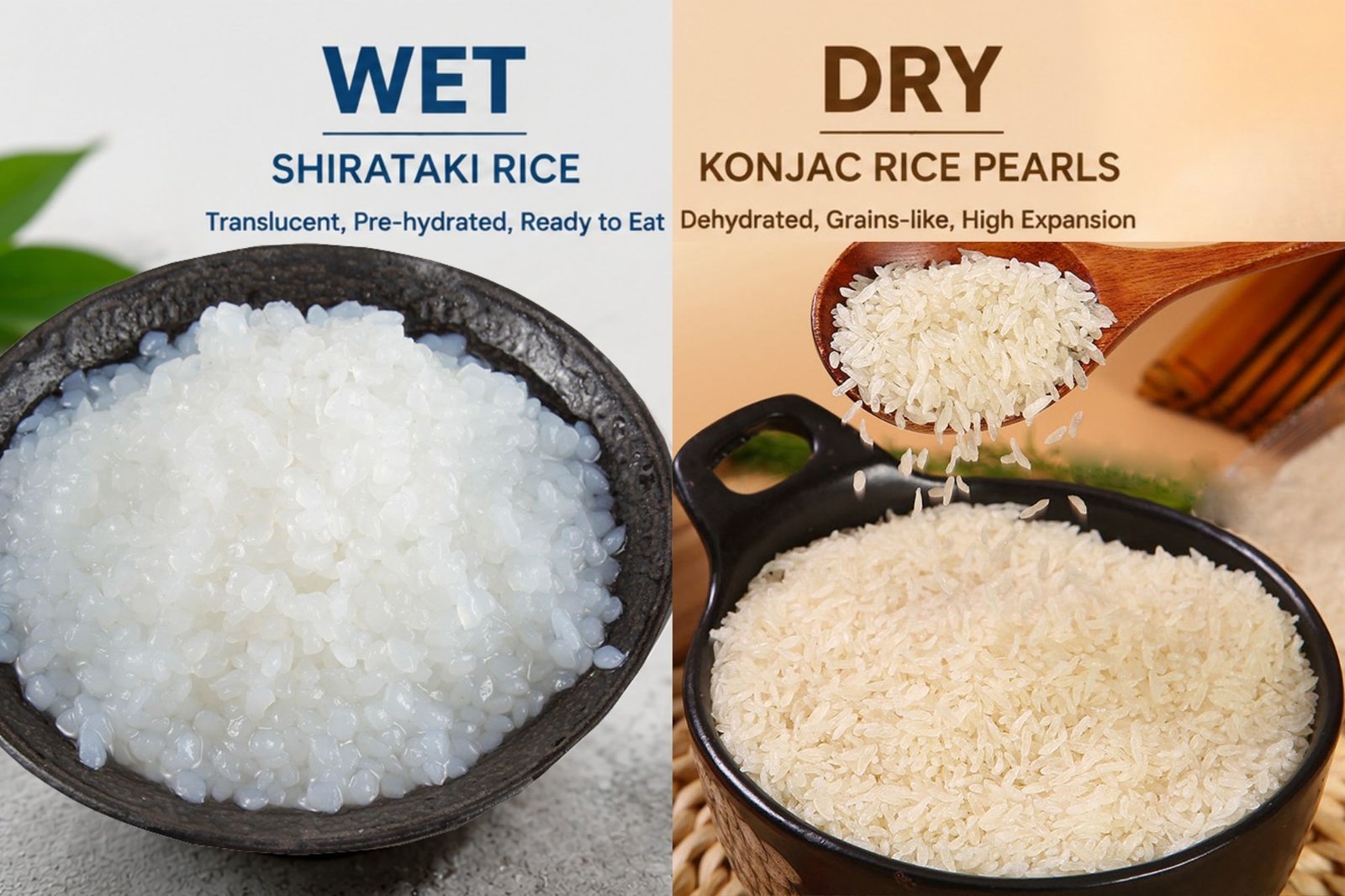

Réponse rapide : Les pâtes et nouilles de konjac sont véritablement en bonne santé pour la plupart des gens lorsqu'ils sont utilisés dans le cadre d'un régime alimentaire équilibré. Avec pratiquement zéro calorie, aucun glucide et des avantages digestifs prouvés, ils sont particulièrement utiles pour la gestion du poids, le contrôle du diabète et la santé de l'intestin. Cependant, c'est en tant que composant alimentaire fonctionnel plutôt qu'une source nutritionnelle complète.
Contenu masquer
De quoi sont faites les nouilles de konjac ?
Pâtes au konjac (également connu sous le nom de nouilles shirataki ou nouilles miracles) est fabriqué à partir de la racine de la plante konjac (Amorphophallus konjac), qui est consommée en Asie depuis plus de 1 500 ans.
Composition de base :
- 95-97% l'eau
- 3-5% fibre de glucomannane
- Traces hydroxyde de calcium (agent raffermissant naturel)
Qu'est-ce qui rend le glucomannane spécial ?
Glucomannane est une fibre alimentaire soluble dans l'eau qui :
Absorbe 50 fois son poids en eau
Forme des réseaux de gel stables
N'a pas d'impact glycémique
Nourrit les bactéries intestinales bénéfiques
Favorise la santé cardiovasculaire
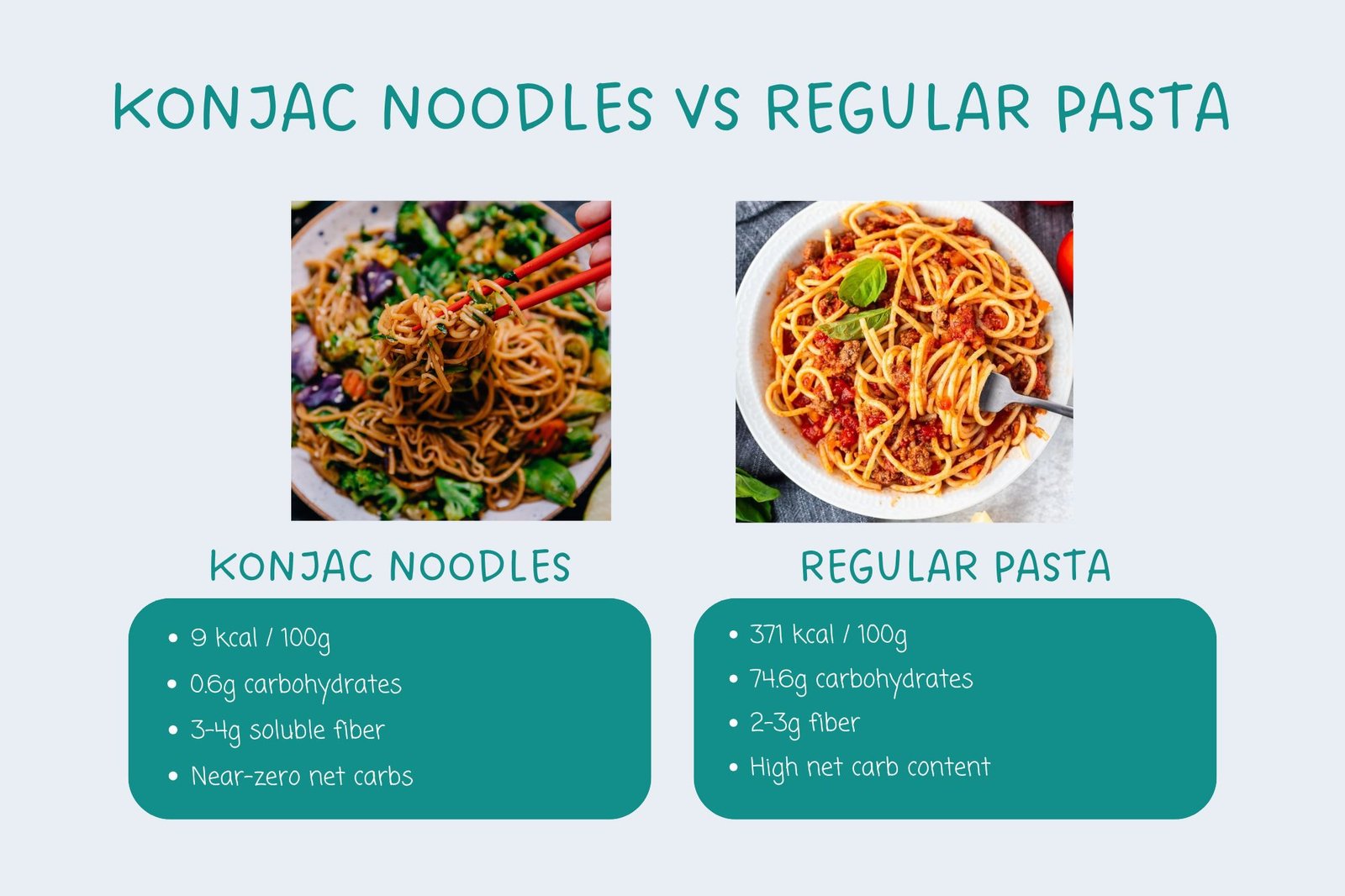
Konjac vs. pâtes traditionnelles Composition :
| Composant | Pâtes de blé (100g) | Nouilles de konjac (100g) |
|---|---|---|
| Calories | 350-380 kcal | 5-10 kcal |
| Glucides | 25-80g | <1g |
| Fibre | 2-3g | 3-4g |
| Protéine | 5-6g | 0 g |
| Gras | 1-2g | 0 g |
| Gluten | Présent | Aucun |
Aperçu clé : Contrairement aux pâtes de blé qui se décomposent en glucose, les nouilles de konjac traversent le système digestif sous forme de fibres bénéfiques, procurant ainsi une sensation de satiété sans calories.
Avantages nutritionnels et preuves sanitaires
Avantages pour la santé scientifiquement prouvés :
1. Soutien exceptionnel à la gestion du poids
Preuves cliniques :
- Essai randomisé de 12 semaines (2019) : Les participants mangeant des nouilles de konjac ont perdu 2,5 kg de plus que le groupe de contrôle.
- Méta-analyse (2020) : Réduction moyenne de 16% de l'apport calorique lorsque le konjac remplace les pâtes ordinaires
- Étude longitudinale japonaise (2018) : 68% des participants ont maintenu leur perte de poids à 6 mois
Mécanisme :
- Très peu de calories : 95% réduction des calories par rapport aux pâtes ordinaires
- Amélioration de la satiété : Se dilate dans l'estomac, déclenchant des signaux de satiété
- Satisfaction prolongée : Le ralentissement de la vidange gastrique prolonge la satisfaction du repas
2. Gestion supérieure de la glycémie
Résultats de la recherche :
- Diabetes Care Journal (2021) : 23% réduction des pics de glucose post-prandiaux
- European Clinical Nutrition (2020) : Amélioration de la sensibilité à l'insuline chez les diabétiques de type 2
- American Journal of Clinical Nutrition (2019) : Pas de réponse glycémique mesurable
Avantages pour différents groupes :
- Diabète de type 2 : Meilleur contrôle de la glycémie sans changement de médicaments
- Pré-diabète : Réduction des marqueurs de résistance à l'insuline
- Individus en bonne santé : Prévention des fluctuations de la glycémie
3. Soutien à la santé cardiovasculaire
Études cliniques :
- Réduction du cholestérol : 10-15% Diminution du LDL dans les études de 8 semaines
- Tension artérielle : Réduction modeste de la pression systolique
- Risque de maladie cardiaque : Amélioration des marqueurs de risque cardiovasculaire
Mécanisme :
- Liaison avec les acides biliaires : Augmente l'excrétion du cholestérol
- Avantages des fibres : Favorise un métabolisme lipidique sain
- Gestion du poids : Protection cardiovasculaire indirecte
4. Amélioration de la santé digestive
Avantages pour la santé intestinale :
- Effets prébiotiques : Nourrit les bactéries bénéfiques (Lactobacillus, Bifidobacterium)
- Production de SCFA : Génère du butyrate et d'autres composés bénéfiques
- Diversité du microbiome : Améliore l'équilibre général des bactéries intestinales
- Soutien à la régularité : Régulation douce et naturelle du transit intestinal
Reconnaissance scientifique : L'Autorité européenne de sécurité des aliments (EFSA) a officiellement reconnu les avantages du glucomannane pour la gestion du poids et le soutien du cholestérol.
Digestibilité et impact sur la santé intestinale
Les pâtes de konjac sont-elles difficiles à digérer ?
Réponse : Non - mais elles fonctionnent différemment des pâtes ordinaires.
Comment les différentes nouilles sont-elles transformées ?
Pâtes de blé traditionnelles :
- L'estomac : Rupture physique
- Intestin grêle : Les enzymes transforment l'amidon en glucose
- Système sanguin : Absorption rapide du glucose
- Résultat : Énergie + pic de glycémie
Nouilles de konjac :
- L'estomac : Expansion avec de l'eau (sensation de plénitude accrue)
- Intestin grêle : Passage en grande partie inchangé
- Gros intestin : Fermentation bactérienne bénéfique
- Résultat : Avantages pour la santé intestinale + pas d'impact sur la glycémie
Comprendre la fermentation des fibres
Lorsque le konjac arrive dans le côlon, les bactéries bénéfiques le transforment en.. :
Acides gras à chaîne courte (AGCC) :
- Butyrate : Favorise la fonction de barrière intestinale
- Acétate : Aide à réguler le métabolisme
- Propionate : Favorise la santé du foie
Ce processus :
- Renforce la barrière intestinale
- Réduit l'inflammation
- Soutient la fonction immunitaire
- Améliore l'absorption des minéraux
Période d'adaptation : À quoi s'attendre
1 à 2 premières semaines :
- Possibilité de légers ballonnements (similaire à l'augmentation des fibres)
- Légers changements dans la fréquence des selles
- Augmentation de la sensation de satiété
Après adaptation :
- Les symptômes digestifs disparaissent généralement
- Amélioration de la régularité
- Amélioration du contrôle de la satiété
Conseils de pro pour une adaptation plus facile :
- Commencez par des portions plus petites (50-100g)
- Rincer soigneusement les nouilles avant de les faire cuire
- Boire beaucoup d'eau
- Combiner avec des protéines et des légumes
- Augmenter progressivement la fréquence
Remarque importante : Tout ajustement digestif est généralement léger et temporaire, comme lors de l'introduction d'autres aliments riches en fibres, tels que l'avoine ou les haricots.
Goût, texture et expérience du consommateur
Les nouilles de konjac ont-elles le même goût que les pâtes ordinaires ?
Réponse honnête : Ils ont des goûts différents, mais beaucoup de gens les trouvent satisfaisants lorsqu'ils sont préparés correctement.
Caractéristiques de la texture :
- Légèrement plus ferme que des pâtes de blé
- Plus élastique et moelleux
- Surface lisse qui absorbe bien les sauces
- Saveur neutre - les saveurs de l'assaisonnement
Pourquoi certaines personnes ne les aiment pas :
Problèmes courants (généralement liés à la qualité) :
- Odeur de poisson : Mauvaise transformation et désodorisation insuffisante
- Texture trop caoutchouteuse : Mauvais équilibre hydrique
- Arrière-goût alcalin : Neutralisation insuffisante
- Sensation visqueuse : Fabrication de qualité inférieure
Comment améliorer le goût et la texture :
Meilleures pratiques de préparation :
- Rincer abondamment sous l'eau froide pendant 2 à 3 minutes
- Sauter à sec dans une poêle pendant 2 à 3 minutes (pour éliminer l'excès d'humidité)
- Assaisonner généreusement - le konjac absorbe bien les saveurs
- Utiliser des sauces savoureuses - la tomate, le pesto, le curry conviennent parfaitement
- Ajouter des protéines et des légumes pour une alimentation complète
Suggestions de recettes :
- Sauté asiatique (méthode de préparation traditionnelle)
- Plats de pâtes italiens avec des sauces riches
- Soupes et bouillons (absorbe parfaitement les saveurs)
- Salades froides avec des vinaigrettes
Recherche sur la satisfaction des consommateurs :
2021 Étude sur les consommateurs (n=500) :
- 72% ont un goût acceptable lorsqu'ils sont correctement préparés
- 84% des avantages appréciés en matière de gestion du poids
- 91% continueraient à consommer pour des raisons de santé
- Qualité de la préparation était le facteur #1 de la satisfaction
Sécurité de la consommation quotidienne
Peut-on manger des nouilles de konjac tous les jours ?
Réponse : Oui, pour la plupart des adultes en bonne santé - avec des lignes directrices appropriées.
Données scientifiques de sécurité :
Études cliniques :
- Études de sécurité à long terme : Pas d'effets indésirables en cas de consommation quotidienne de 10 g de glucomannane.
- Données sur l'utilisation traditionnelle : Plus de 1 500 ans de consommation régulière en Asie
- Statut FDA : Généralement reconnu comme sûr (GRAS)
- Agrément européen : Nouvel ingrédient alimentaire autorisé (E425)
Directives journalières recommandées :
| Groupe d'utilisateurs | Montant journalier | Fréquence | Considérations particulières |
|---|---|---|---|
| Débutants | 50-100g | 3-4x par semaine | Contrôler l'adaptation |
| Utilisateurs réguliers | 100-200g | Quotidiennement | Assurer une hydratation adéquate |
| La gestion du poids | 150-250g | Quotidiennement | Combiner avec une alimentation équilibrée |
| Diabétiques | 100-200g | Quotidiennement | Surveiller les améliorations de la glycémie |
Lignes directrices essentielles pour l'utilisation quotidienne :
✅ Faire :
- Boire beaucoup d'eau (8 à 10 verres par jour)
- Combiner avec des sources de protéines
- Varier son alimentation
- Surveillez la réaction de votre corps
❌ Ne pas le faire :
- S'appuyer uniquement sur le konjac pour l'alimentation
- Dépasser brusquement les portions recommandées
- Ignorer les besoins d'hydratation
- Utiliser comme substitut de repas sans autres nutriments
Qui doit l'utiliser ?
- Grossesse/allaitement : Consulter un professionnel de la santé
- IBS sévère : Introduire très progressivement
- Troubles de la déglutition : Assurer une préparation adéquate
- Calendrier de prise des médicaments : Peut affecter l'absorption de certains médicaments
Inconvénients et limites potentiels
Une évaluation honnête : Quels sont les inconvénients ?
Limites nutritionnelles :
Ce que les nouilles de konjac n'apportent pas :
- ❌ Protéines : 0g par portion
- ❌ Acides aminés essentiels : Aucun
- ❌ Vitamines B : Quantités minimales
- ❌ Minéraux : Peu de fer, de zinc, etc.
- ❌ Les calories pour l'énergie : Extrêmement faible
Solution : Associez toujours les nouilles konjac à des sources de protéines (poulet, poisson, tofu, œufs) et à des légumes riches en nutriments.
Considérations digestives :
Effets secondaires possibles (généralement temporaires) :
- Légers ballonnements pendant la période d'adaptation
- Augmentation du gaz de la fermentation des fibres
- Changements dans les habitudes intestinales (amélioration de la régularité)
- Sensation de satiété si les portions sont trop importantes
Défis en matière de goût et de texture :
Pourquoi certaines personnes luttent :
- Différentes sensations en bouche à partir de pâtes de blé
- Nécessite une préparation adéquate pour de meilleurs résultats
- La qualité varie considérablement entre les marques
- Attentes culturelles en matière de goût vs. réalité
Considérations relatives aux coûts :
- Prix plus élevé par portion que les pâtes ordinaires
- Produits de qualité obtenir des prix élevés
- Frais d'expédition pour les produits réfrigérés
Quand les nouilles de konjac ne vous conviennent pas :
❌ Si vous avez besoin d'aliments riches en calories (insuffisance pondérale, récupération)
❌ Si vous souffrez de troubles digestifs graves (sans avis médical)
❌ Si vous préférez la texture traditionnelle des pâtes (et ne sont pas prêts à s'adapter)
❌ Si vous ne buvez pas assez d'eau régulièrement
Comparaison avec d'autres nouilles saines
Comment les nouilles de Konjac se comportent-elles ?
| Type de nouilles | Calories (100g) | Glucides | Protéine | Fibre | Meilleur pour |
|---|---|---|---|---|---|
| Konjac | 5-10 | <1g | 0 g | 3-4g | Perte de poids, diabète |
| Blé complet | 130 | 25g | 5g | 3g | Alimentation équilibrée |
| Pâtes aux lentilles | 120 | 20g | 8 g | 4g | Besoins élevés en protéines |
| Nouilles de riz | 110 | 25g | 2 g | 1 g | Option sans gluten |
| Nouilles de courgettes | 20 | 4g | 2 g | 1 g | Très faible teneur en glucides |
| Pâtes aux pois chiches | 140 | 22g | 8 g | 5g | Protéines + fibres |
Avantages uniques du konjac :
L'option la moins calorique
La plus grande satiété par calorie
Impact glycémique nul
Les effets prébiotiques les plus importants
La plus longue histoire d'utilisation traditionnelle
Convient le mieux aux cétos stricts
Quand choisir des alternatives :
Choisissez les pâtes aux lentilles/pois chiches si :
- Vous avez besoin d'un apport plus important en protéines
- Renforcement musculaire ou convalescence
- Nourrir les enfants en pleine croissance
Choisissez le blé complet si :
- Vous voulez un goût et une texture familiers
- Besoin de plus de vitamines B et de minéraux
- Le budget est une préoccupation majeure
Choisissez les nouilles aux courgettes si :
- Vous préférez les préparations fraîches et crues
- Vous souhaitez un apport maximal en légumes
- Appréciez les textures croustillantes
Les facteurs de qualité qui comptent
Pourquoi la qualité de la fabrication influe-t-elle considérablement sur les prestations de santé ?
Toutes les nouilles de konjac n'offrent pas les mêmes avantages pour la santé ou la même expérience pour le consommateur.
Indicateurs de qualité supérieure :
Normes de traitement avancées :
- Purification en plusieurs étapes : Élimine les résidus alcalins et les odeurs
- Équilibrage contrôlé du pH : Optimise la digestibilité et le goût
- Gestion précise de l'humidité : Assure une texture stable
- Technologie hygiénique d'emballage humide : Maintien de la fraîcheur et de la sécurité
- Certifications de qualité : Conformité BRC, IFS, HACCP
Marqueurs de l'expérience du consommateur :
- Odeur minimale à l'ouverture
- Goût neutre et pur
- Texture homogène lot à lot
- Préparation facile avec des instructions claires
- Durée de conservation prolongée sans conservateurs
Drapeaux rouges de la qualité :
Indicateurs de traitement médiocres :
- Forte odeur de poisson (désodorisation insuffisante)
- Alcalinité excessive (mauvaise neutralisation)
- Texture irrégulière (fabrication incohérente)
- Durée de conservation courte (mauvais emballage/hygiène)
- Liquide trouble dans l'emballage (signes de contamination)
Comment la qualité influe sur les bénéfices pour la santé :
Produits de haute qualité :
- Meilleure digestibilité (contrôle adéquat du pH)
- Meilleure absorption des nutriments (structure optimale des fibres)
- Réduction des effets secondaires (un traitement adéquat réduit les irritants)
- Amélioration de la conformité (meilleur goût = utilisation continue)
Produits de faible qualité :
- Inconfort digestif (mauvais équilibre du pH)
- Réduction des prestations de santé (structure de la fibre endommagée)
- Insatisfaction des consommateurs (mauvais goût/texture)
- Préoccupations en matière de sécurité (assainissement inadéquat)
💡 Conseil aux consommateurs : Investissez dans des marques de qualité bénéficiant de certifications appropriées. Les bienfaits du konjac pour la santé ne se concrétisent que lorsque le produit est correctement fabriqué et que vous continuez à l'utiliser régulièrement.
Résumé de la recherche scientifique
Principaux résultats cliniques :
Études sur la gestion du poids :
- 2019 Recherche sur l'obésité : Perte de poids supplémentaire de 5,5 livres sur 12 semaines
- Journal de l'appétit 2020 : 16% réduction de l'apport calorique quotidien
- 2021 Nutrition Reviews : Maintien du poids à 6 mois
Recherche sur la santé métabolique :
- Diabetes Care (2021) : 23% réduction de la glycémie post-prandiale
- European Journal of Clinical Nutrition (2020) : Amélioration de la sensibilité à l'insuline
- American Journal of Clinical Nutrition (2019) : Réduction du taux d'HbA1c chez les diabétiques
Études cardiovasculaires :
- Journal of Nutritional Science (2020) : 12% Réduction du cholestérol LDL
- Recherche sur l'hypertension (2019) : Amélioration modeste de la tension artérielle
- Circulation Research (2021) : Amélioration du profil de risque cardiovasculaire global
Recherche sur la santé intestinale :
- Microbes intestinaux (2020) : Augmentation de la diversité des bactéries bénéfiques
- Microbiologie appliquée et environnementale (2019) : Production accrue de SCFA
- Journal of Functional Foods (2021) : Amélioration de la fonction de barrière intestinale
Guide pratique d'intégration
Pour la gestion du poids :
Stratégie optimale :
- Remplacer 1 à 2 repas de pâtes par semaine dans un premier temps
- Combiner avec des aliments riches en protéines (poulet, poisson, tofu)
- Ajouter des graisses saines (huile d'olive, avocat, noix)
- Inclure des légumes colorés pour les micronutriments
Exemple de plan hebdomadaire :
- Lundi : Nouilles de konjac aux boulettes de viande de dinde
- Mercredi : Shirataki sauté aux crevettes et aux légumes
- Vendredi : Salade de pâtes de konjac au poulet grillé
Pour la gestion du diabète :
Conseils d'intégration :
- Contrôler la réponse glycémique individuellement
- Combiner avec des protéines pour stabiliser davantage le glucose
- Utiliser comme stratégie de pré-repas réduire l'impact global des repas
- Travailler avec le prestataire de soins de santé d'ajuster les médicaments si nécessaire
Pour l'optimisation de la santé intestinale :
Meilleures pratiques :
- Commencer progressivement pour permettre l'adaptation du microbiome
- A combiner avec d'autres aliments prébiotiques (ail, oignons, asperges)
- Maintenir une consommation régulière pour des avantages durables
- Contrôler les améliorations dans la régularité et le confort
Évaluation finale de la santé
Les nouilles de konjac sont-elles bonnes pour la santé ? Verdict scientifique :
Avantages fondés sur des données probantes :
- Un outil exceptionnel de gestion du poids
- Un excellent contrôle de la glycémie
- Soutien cardiovasculaire prouvé
- Des avantages significatifs pour la santé intestinale
- Sans danger pour une consommation quotidienne modérée
Une perspective équilibrée :
- Pas complet sur le plan nutritionnel (besoin d'ajouts de protéines/nutriments)
- Nécessite une période d'adaptation pour certains individus
- La qualité compte beaucoup pour des avantages optimaux
- Meilleur dans le cadre d'un régime alimentaire varié plutôt qu'une seule agrafe
Recommandation en matière de santé :
Les nouilles de konjac sont vraiment saines lorsqu'il est utilisé de manière appropriée :
- En remplacement stratégique pour les plats de pâtes riches en calories
- Combiné à des sources de protéines complètes
- Intégrée dans un régime alimentaire varié et équilibré
- Choisis parmi des fabricants de qualité
- Consommé avec une hydratation adéquate
Ils sont particulièrement utiles pour :
- Programmes de gestion du poids
- Stratégies de contrôle du diabète
- Modes de vie céto/faible teneur en glucides
- Amélioration de la santé intestinale
- Réduction du risque cardiovasculaire
Informations sur l'industrie pour les professionnels de l'alimentation
Croissance du marché et tendances de consommation :
Données du marché mondial :
- 23% croissance annuelle dans les produits alimentaires à base de konjac
- $1.2B Taille du marché prévu d'ici 2025
- 68% sensibilisation des consommateurs dans les populations soucieuses de leur santé
Facteurs clés de succès :
- Développement supérieur de la texture grâce à un traitement avancé
- Positionnement propre de l'étiquette avec un minimum d'additifs
- Marketing éducatif aborder la préparation et les avantages
- Cohérence de la qualité sur l'ensemble des lots de production
Excellence en matière de fabrication Exigences :
Éléments critiques de réussite :
- Systèmes de purification avancés pour le contrôle des odeurs
- Gestion précise du pH pour une digestibilité optimale
- Traitement sans contamination pour l'assurance de la sécurité
- Optimisation des textures pour les préférences du marché occidental
- Fiabilité de la chaîne d'approvisionnement pour une disponibilité constante
Questions fréquemment posées
Q : Les nouilles de konjac sont-elles plus saines que les pâtes ordinaires ?
A : Pour la gestion du poids et le contrôle de la glycémie, oui. Cependant, ils fournissent moins de protéines et de micronutriments, et il est donc préférable de les associer à d'autres aliments nutritifs.
Q : Puis-je manger des nouilles de konjac dans le cadre d'un régime céto ?
A : Absolument. Avec moins de 1 g de glucides nets par portion, elles sont l'une des options de nouilles les plus compatibles avec le régime céto.
Q : Les nouilles de konjac peuvent-elles m'aider à perdre du poids ?
A : Des études montrent qu'ils peuvent contribuer à la perte de poids grâce à la réduction des calories et à l'augmentation de la satiété, mais ils sont plus efficaces dans le cadre d'un plan d'alimentation sain.
Q : À quelle fréquence puis-je manger des nouilles de konjac en toute sécurité ?
A : La consommation quotidienne est sans danger pour la plupart des gens, mais il faut veiller à une hydratation suffisante et à une alimentation variée.
Q : Les nouilles de konjac sont-elles périmées ?
A : Oui, mais ils ont généralement une longue durée de conservation (6 à 12 mois) lorsqu'ils sont correctement emballés. Vérifiez toujours les dates de péremption.
Q : Les enfants peuvent-ils manger des nouilles de konjac ?
A : Généralement sans danger, mais il faut veiller à une bonne préparation et commencer par de petites portions. Les enfants ont besoin de plus de calories et de nutriments que le konjac n'en fournit à lui seul.