In the rapidly expanding market for low-carb alternatives, Shirataki Rice (Konjac Rice) has become a cornerstone product for health brands. However, for brand owners and wholesalers, the choice between Wet (water-packed) and Dry (dehydrated) versions involves more than just taste—it involves logistics, shelf-stability, and manufacturing precision.
As a leading manufacturer based in Anzhou, Sichuan, Eastern Morning provides both formats. Here is the technical breakdown to help you decide which fits your business model.
What is Shirataki Rice?
From a food science standpoint, Shirataki rice is an application of Glucomannan, a soluble fiber extracted from the konjac root. At Eastern Morning, we utilize the unique climate of Sichuan to produce konjac with higher viscosity, ensuring our rice maintains its shape during retort processing or dehydration.
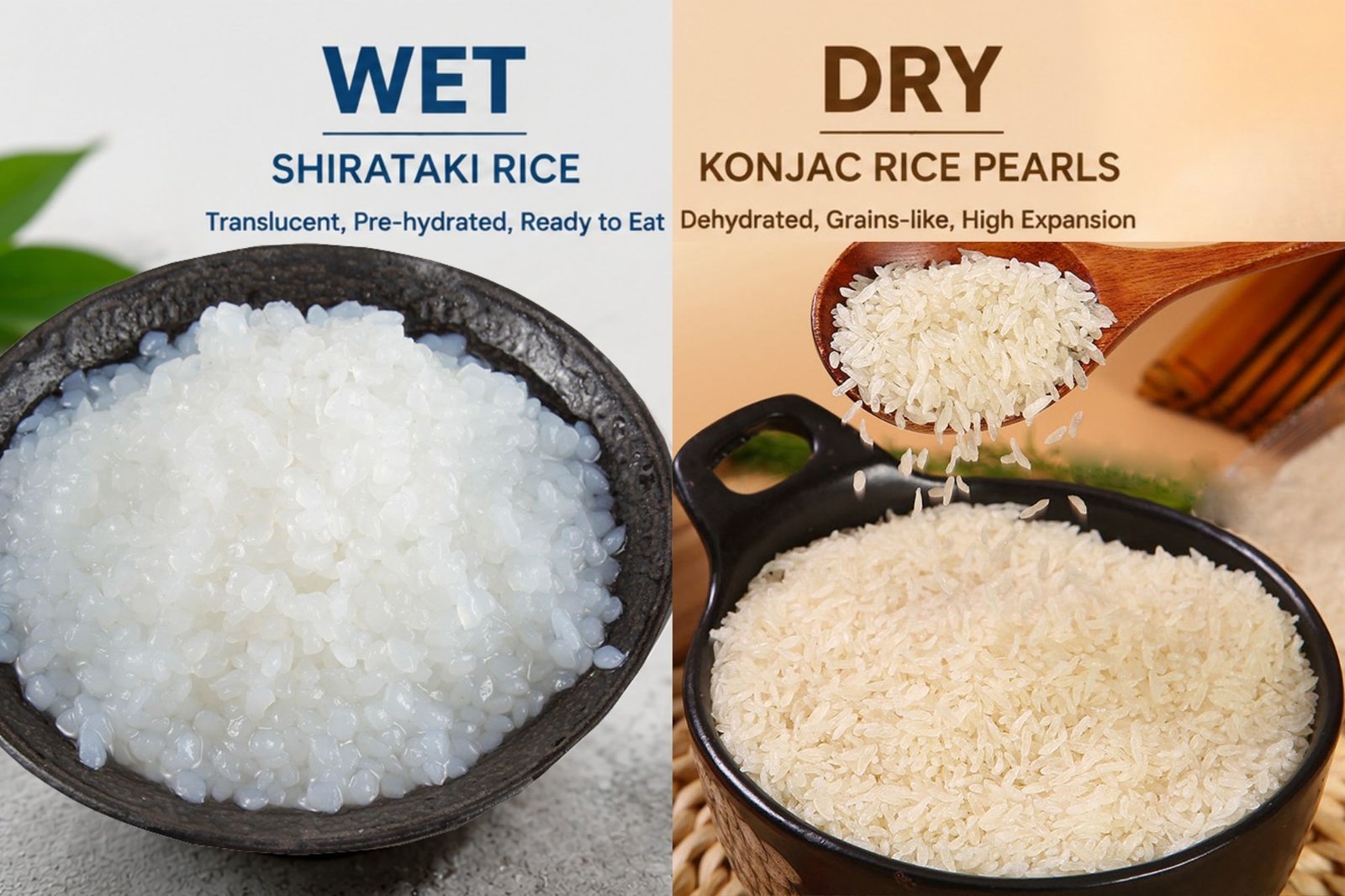
- Wet Format: 97% water, 3% konjac; optimized for "open-and-eat" convenience
- Dry Format: Blend of konjac flour and cereal flours (like Red Rice); optimized for texture and shipping efficiency
Wet Shirataki Rice: The Retail Staple
Wet Shirataki rice is the traditional "Shirataki" format. It is pre-hydrated and sealed in a pH-balanced aqueous solution to maintain freshness.
Technical Profile (Per 100g)
| Feature | Specification |
|---|---|
| Energy | 25 kJ (approx. 6 kcal) |
| Dietary Fiber | 3.1 g |
| Shelf Life | 12–24 months (ambient storage) |
| Best For | Retail consumers, low-calorie meal kits |
Pros for Brand Owners:
- Immediate Consumption: Requires only a 2-minute rinse
- Keto Purity: Zero net carbs and virtually zero calories
- Logistical Note: Packed in water, shipping costs per unit are higher due to weight
Dry Konjac Rice: The Export Game-Changer
Dry Konjac Rice (specifically our Red Rice blend) is the "next generation" of konjac products. By dehydrating the rice, we create a product that looks and feels significantly more like traditional long-grain rice.
Image Suggestion: An infographic showing the 3x expansion ratio—1kg of dry rice becoming 3kg+ of cooked rice
Alt Text: Dry Konjac Rice Expansion and Yield for B2B Food Service
Technical Profile (Per 100g Dry)
| Feature | Specification |
|---|---|
| Energy | 347 Kcal (Concentrated) |
| Protein | 7.8 g |
| Dietary Fiber | 2.8 g |
| Carbohydrate | 69.2 g (Pre-rehydration) |
Pros for Brand Owners:
- Shipping Efficiency: Lightweight and compact; ideal for international sea and air freight
- Texture: Offers a superior "al dente" bite for consumers who find wet shirataki too "rubbery"
- Yield: Expands 2.5x to 4x its weight when cooked, providing high value for bulk food service
Key Differences at a Glance
| Feature | Wet Shirataki Rice | Dry Konjac Red Rice |
|---|---|---|
| Logistics | Heavier, higher shipping cost | Lightweight, cost-effective |
| Preparation | Rinse & Heat (3 mins) | Soak or Microwave (15 mins) |
| Mouthfeel | Soft, gelatinous | Firm, rice-like texture |
| B2B Value | High-turnover retail | Long-distance export & meal kits |
FAQ
Which type has a longer shelf life?
Both have excellent stability (up to 24 months), but Dry Rice is less sensitive to temperature fluctuations during transit, making it the safer choice for long-distance export.Is the "fishy" odor present in both?
Our advanced Sichuan manufacturing process significantly reduces the natural konjac aroma. Wet rice requires a quick rinse to remove alkaline packing water, while dry rice is virtually odor-free from the start.Can we customize the ingredients for Private Label?
Absolutely. As a vertically integrated manufacturer, Eastern Morning can blend konjac with oat fiber, purple potato, or red rice to meet your brand’s nutritional and aesthetic requirements.
Conclusion
The choice between wet and dry shirataki rice depends on your distribution strategy:
- Wet Rice: Gold standard for convenience retail markets
- Dry Konjac Rice: Strategic choice for global scaling with reduced shipping overhead and more traditional rice texture
Ready to elevate your product line?
As a BRCGS and Halal-certified manufacturer, Eastern Morning provides high-capacity OEM and white-label solutions.
Contact our Export Department for Bulk Samples and Quotations.