You’ve heard about konjac rice. Maybe a friend mentioned it. Maybe you saw it in a health food store. But you’re not sure if it’s safe, if it tastes good, or if it’s worth trying.
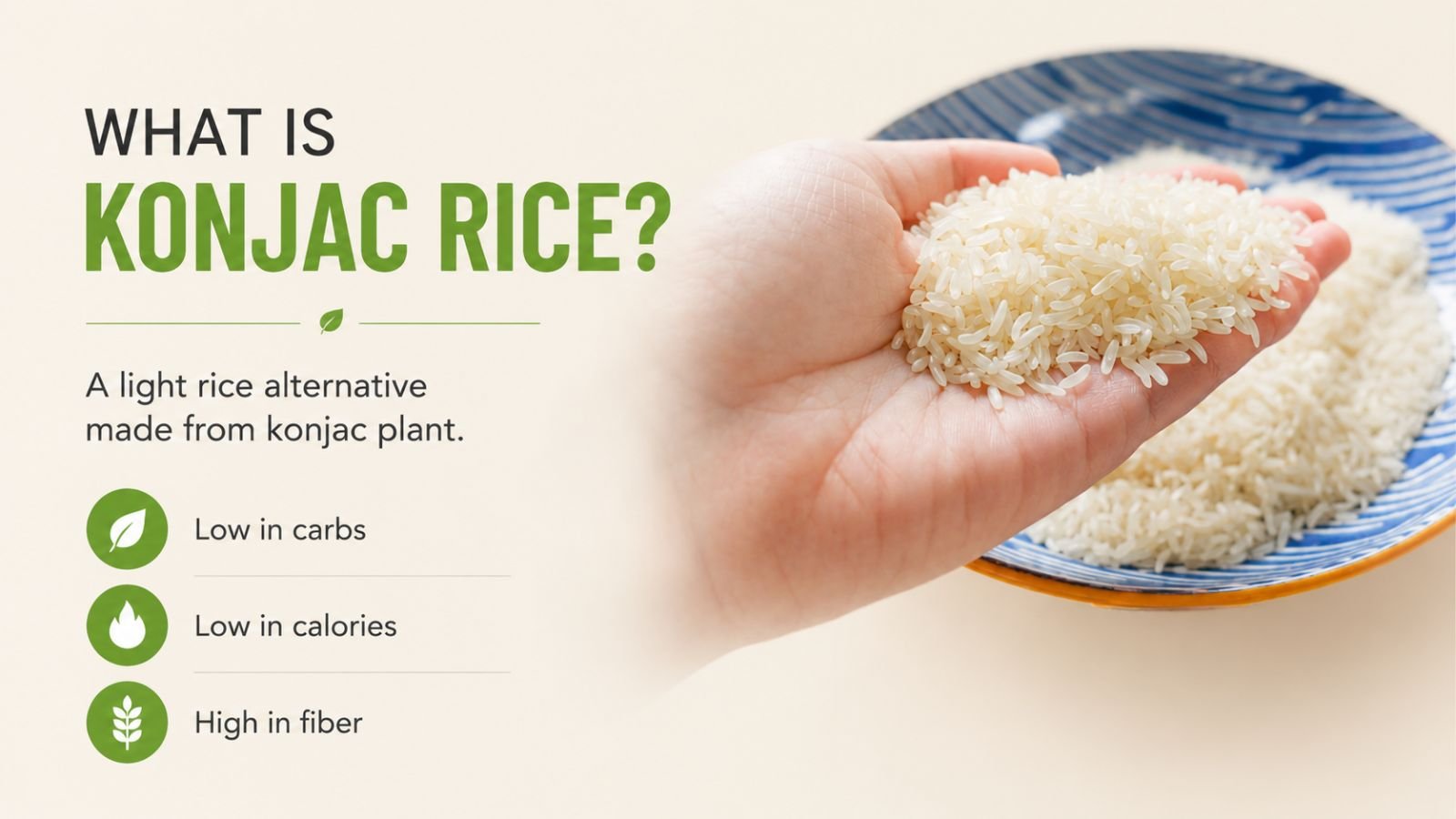
Konjac rice is a low-calorie, low-carb rice substitute made from konjac flour and water. It contains almost zero net carbs and is rich in glucomannan fiber. It is safe to eat, easy to cook, and works well for people on keto, low-carb, or calorie-controlled diets.
I know the first time I looked at konjac rice, I had a lot of questions. It looks strange. It smells a little odd. And I wasn’t sure I could trust it. But after I learned more about it and started cooking with it, my thinking changed completely. Let me walk you through everything I wish I had known from the start.
What Is Konjac Rice?
Most people have never heard of konjac before they see it on a product label. That’s a problem, because without knowing what it is, it’s hard to trust it.
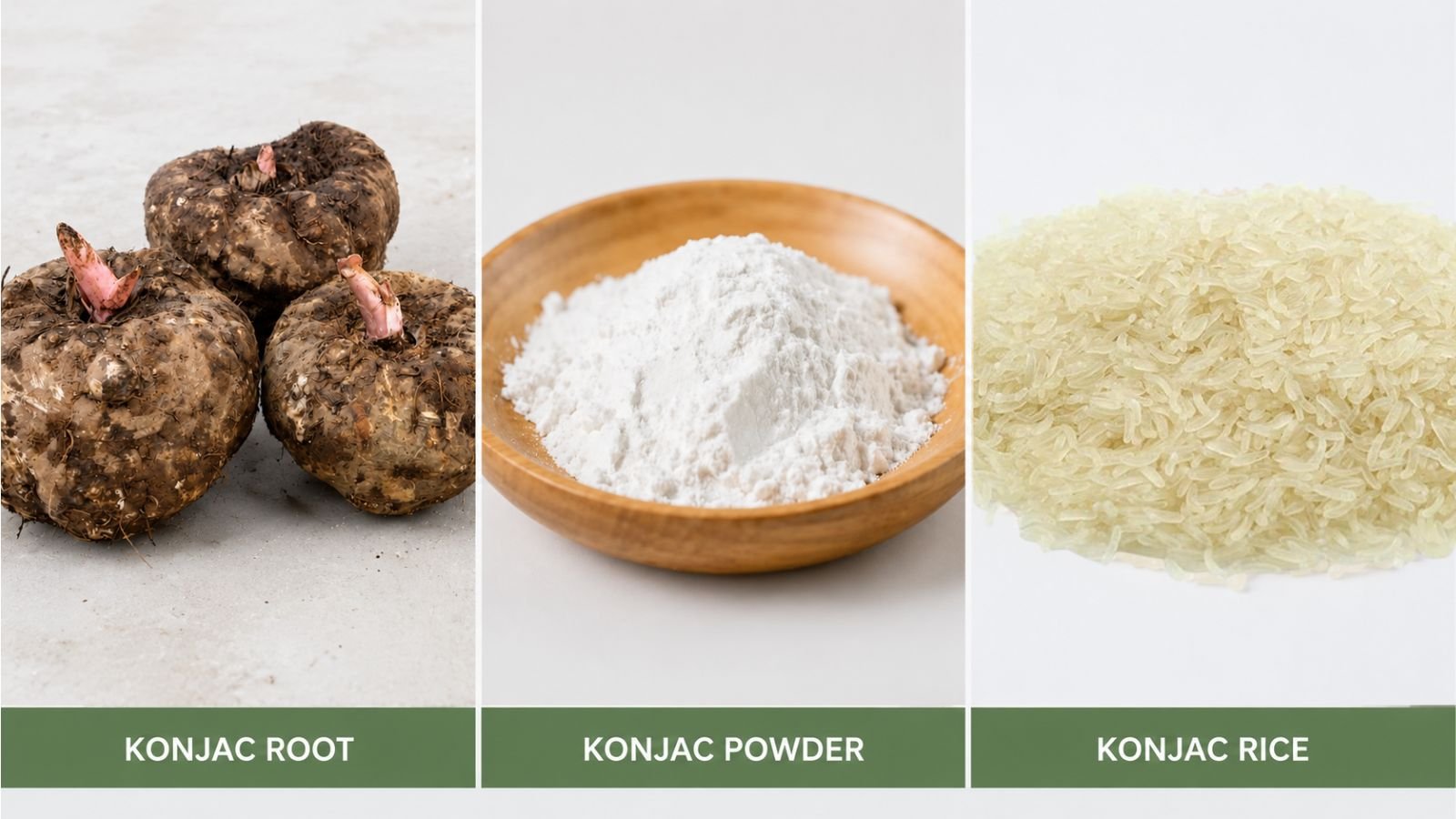
Konjac rice is made from the konjac plant root, also called Amorphophallus konjac. The root is dried and ground into a flour called glucomannan. This flour is mixed with water and shaped into small rice-like grains. The result is a rice substitute with almost no calories and no digestible carbs.
Konjac has been eaten in Asia for over a thousand years. It’s popular in Japan, China, and Korea. You’ve probably seen it in products like shirataki noodles. Konjac rice is the same idea — just in rice form.
What Makes Konjac Rice Different from Regular Rice?
Here’s a quick comparison to help you understand the difference:
| Feature | White Rice | Konjac Rice |
|---|---|---|
| Calories (per 100g) | ~130 kcal | ~10 kcal |
| Carbohydrates | ~28g | ~1g |
| Fiber | ~0.4g | ~2–4g |
| Protein | ~2.7g | ~0g |
| Gluten-free | Yes | Yes |
| Main ingredient | Starch | Glucomannan fiber |
Konjac rice doesn’t feed your body with energy the way white rice does. Instead, the glucomannan fiber passes through your digestive system mostly undigested. This is why it has almost no calories. It fills your stomach, slows digestion, and helps you feel full longer. For people trying to eat less or cut carbs, this is a big deal.
Is Konjac Rice Dangerous?
This is the question I hear most often. People see an unfamiliar food and wonder if it’s actually safe.
Konjac rice is safe for most adults. It has been consumed in Asia for centuries. Regulatory bodies like the FDA and EFSA recognize glucomannan as safe. The main risks are minor: some people experience bloating or gas when they first eat it, especially in large amounts.
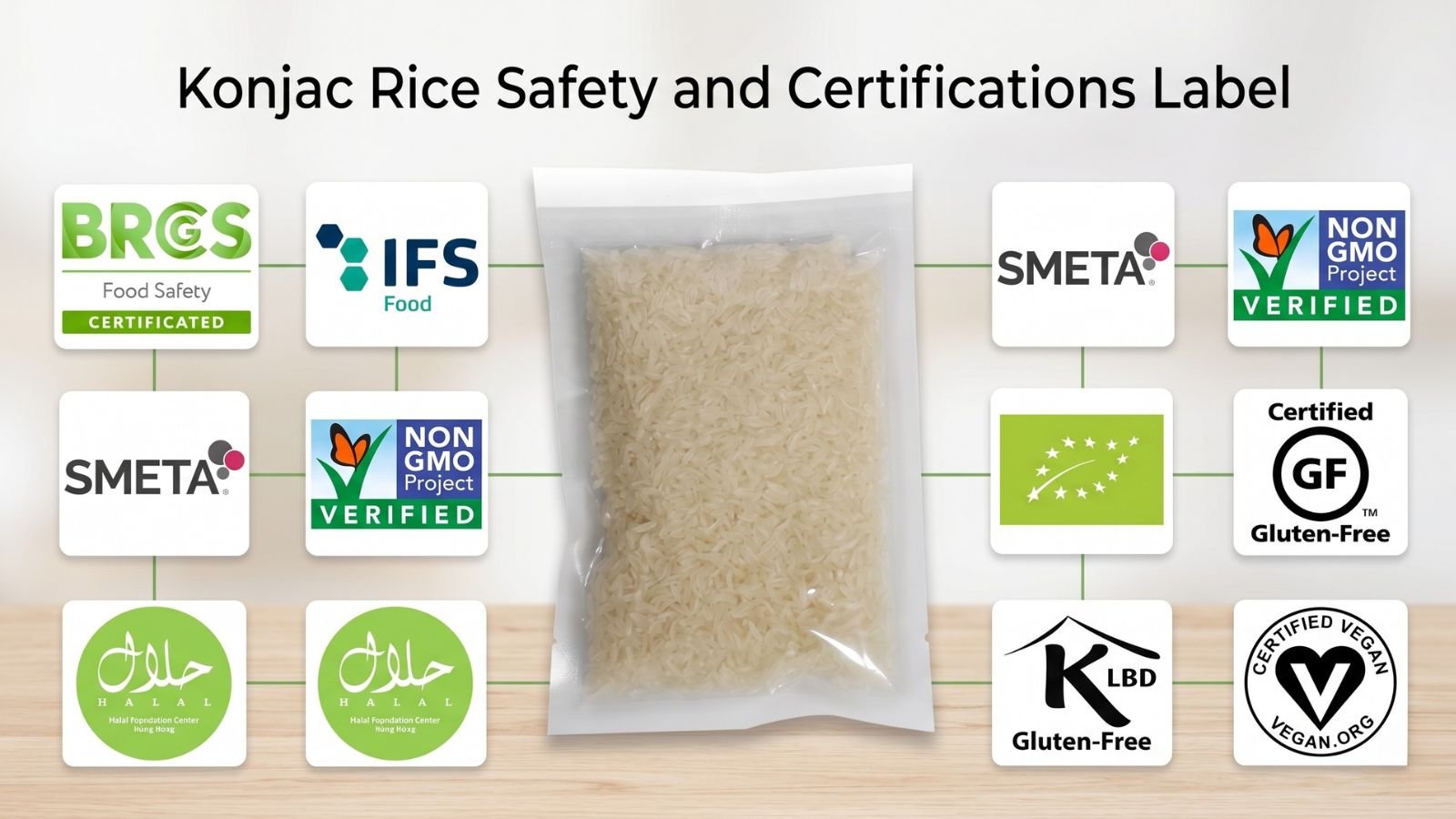
Let me be clear about what "safe" means here. Konjac rice itself is not toxic. The fiber in it is natural and well-studied. But there are a few things you should know before eating it regularly.
Who Should Be Careful?
| Group | Why to Be Careful |
|---|---|
| People with digestive issues | Glucomannan is a strong fiber. It can cause gas or bloating if you eat too much too fast. |
| People taking medications | Glucomannan may slow how your body absorbs some medications. Take meds separately from konjac meals. |
| Children | Not recommended for young children in large amounts. Their digestive systems handle high fiber differently. |
| People with swallowing problems | Konjac gels expand with water. Dry konjac products should always be eaten with plenty of water. |
For healthy adults, konjac rice is not dangerous. Start with a small portion if you are new to it. Drink enough water throughout the day. Your body will adjust in a few days.
One more thing: konjac rice has a natural smell when you open the package. It’s a slightly earthy or fishy smell. This is normal. It doesn’t mean the product is bad. Rinsing it under cold water removes most of the smell.
How Does Konjac Rice Taste?
Here’s the honest truth. A lot of people try konjac rice, don’t prepare it right, and decide they hate it. Then they tell their friends it tastes terrible.
On its own, konjac rice is almost tasteless. It has a very mild, slightly neutral flavor. The texture is soft but slightly chewy — firmer than regular rice. It absorbs flavors well, which makes it very versatile when cooked with sauces, broths, or seasonings.
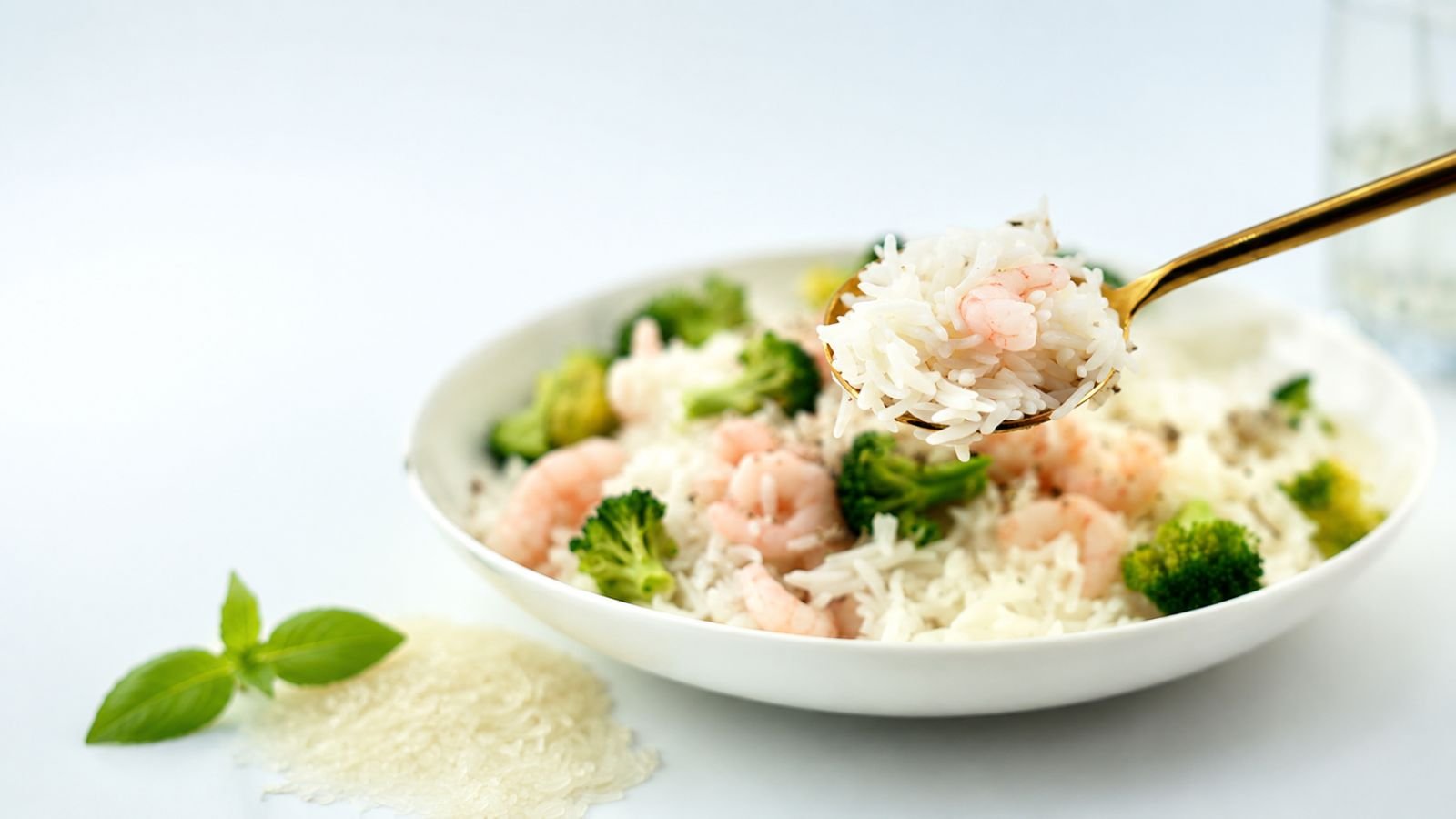
I think the problem is that people expect it to taste like white rice. It doesn’t. White rice has a subtle sweetness and a starchy texture. Konjac rice has neither. But that’s not a bad thing — it just means you need to cook it differently.
What Does the Texture Feel Like?
| Texture Factor | White Rice | Konjac Rice |
|---|---|---|
| Softness | Soft and fluffy | Soft but slightly firm |
| Chewiness | Low | Slightly higher |
| Stickiness | Medium to high | Low |
| Mouthfeel | Starchy | Light and clean |
The best way I can describe konjac rice is: imagine a very light, clean grain that acts like a sponge for whatever you cook it with. It has no strong taste of its own. That’s actually its strength. Use it in fried rice, curry, stir fry, or a grain bowl — and it picks up all the flavor around it.
How to Cook Konjac Rice
Bad preparation is the number one reason people give up on konjac rice. Let me fix that for you.
To cook konjac rice, drain and rinse the package thoroughly under cold water. Then dry-fry it in a pan without oil for 2–3 minutes to remove moisture. After that, add your sauces, proteins, and vegetables and cook it like normal fried rice or a grain dish.
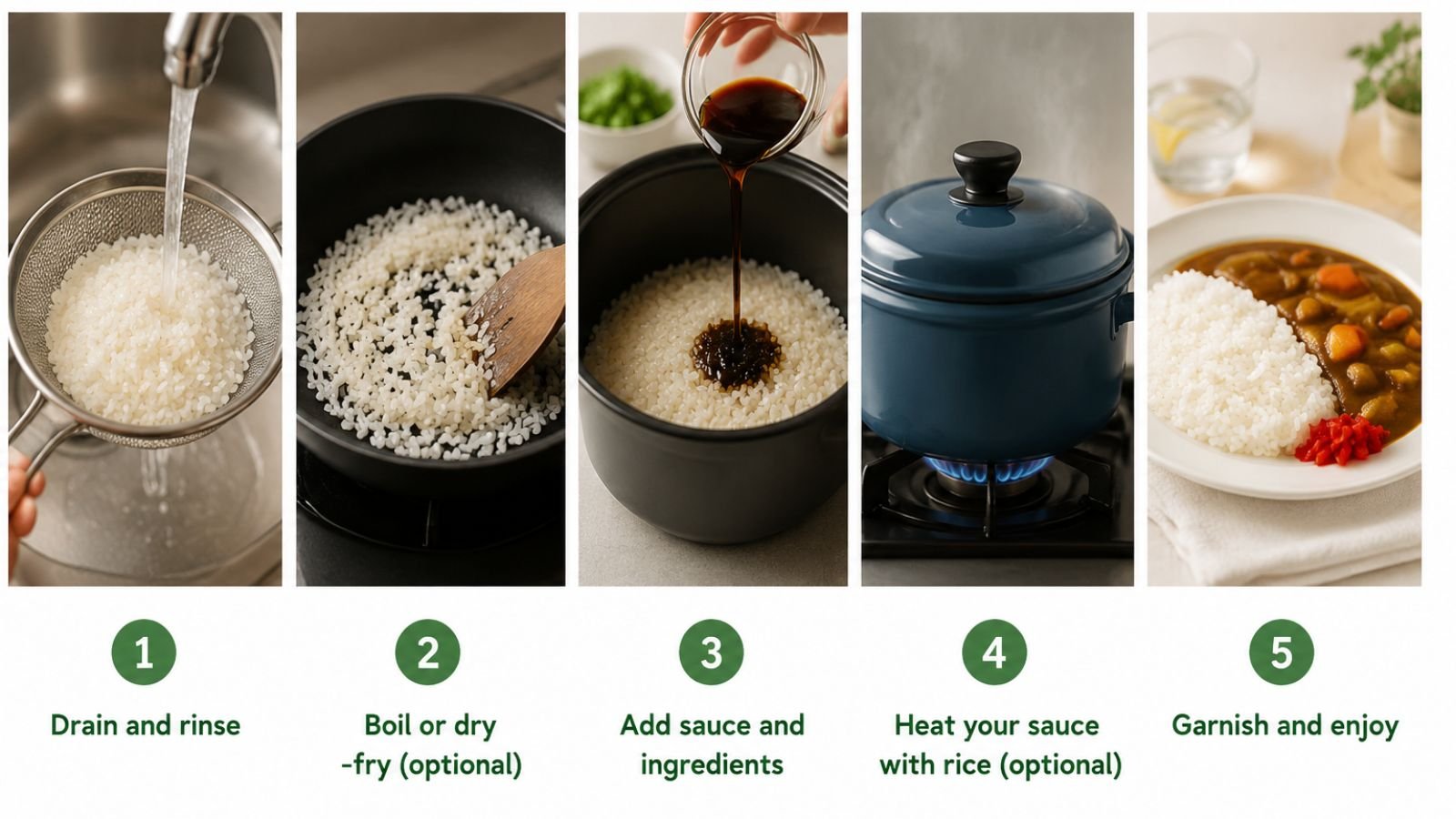
Most konjac rice sold in stores is pre-cooked and packed in water. This means it’s ready to eat after rinsing. But skipping the dry-fry step leaves it watery and rubbery. The dry-fry step is the most important thing I can tell you.
Step-by-Step Basic Cooking Method
| Step | Action | Why It Matters |
|---|---|---|
| 1 | Open the package and drain the liquid | Removes the packaging water and reduces smell |
| 2 | Rinse under cold water for 1–2 minutes | Further removes smell and cleans the grains |
| 3 | Heat a pan on medium-high without oil | Prepares the pan for dry-frying |
| 4 | Add konjac rice to the dry pan | No oil needed at this stage |
| 5 | Stir for 2–3 minutes until dry | Removes excess moisture — this is the key step |
| 6 | Add sauce, seasoning, vegetables, or protein | Now it absorbs flavor like a normal grain |
| 7 | Cook for 3–5 more minutes | Finishes the dish like any stir fry or grain bowl |
This method works for almost every konjac rice dish. Once you do it once, it becomes second nature.
How to Cook Dried Konjac Rice
Dried konjac rice is a different product. It looks like small dry grains or flakes. It needs more preparation than the wet, packaged version.
To cook dried konjac rice, soak it in cold water for 20–30 minutes first. Then boil it in fresh water for 5–8 minutes until the grains are soft and translucent. Drain and rinse well before cooking it further in a pan or using it in a recipe.
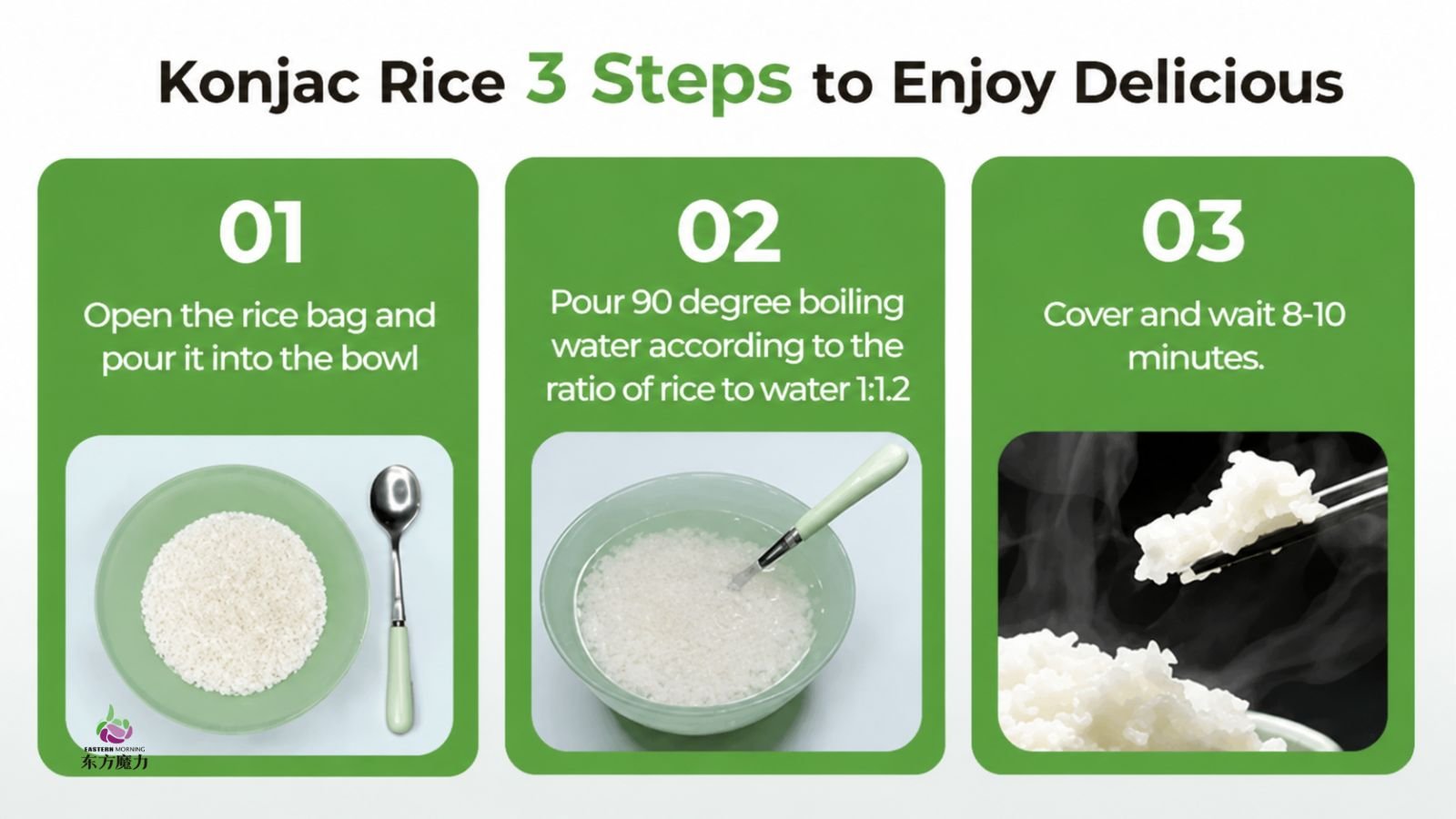
Dried konjac rice is common in Asian grocery stores and online. It stores much longer than wet konjac rice and is lighter to ship. But it needs that extra soaking and boiling step.
Dried vs. Wet Konjac Rice Comparison
Here’s something most people get wrong. They assume dried konjac rice is harder to prepare. It’s actually the opposite.
With dried konjac rice, you just add hot water and wait 5–10 minutes. That’s it. With wet konjac rice, the process is longer: drain the liquid, boil it, drain again, then dry-fry it in a pan. Wet konjac rice takes more steps, not fewer.
| Feature | Wet (Packaged) Konjac Rice | Dried Konjac Rice |
|---|---|---|
| Prep steps | Drain → Boil → Drain → Dry-fry | Soak in water → Ready to cook |
| Prep time | 10–15 minutes | 5–10 minutes (soaking) |
| Texture | Soft, gelatinous, ready-to-use | Firmer, chewier, absorbs flavor well |
| Best used for | Quick single-serve meals | Stir-fries, pilafs, sushi, batch cooking |
| Storage | Refrigerated after opening | Dry pantry, no refrigeration needed |
| Shelf life | Shorter (check packaging) | Much longer (12–24 months) |
| Scalability | Good for retail consumers | Better for bulk distribution and foodservice |
Dried konjac rice has a firmer and chewier texture after soaking. That texture works really well for dishes where you want the rice to hold its shape — stir-fries, pilafs, and even sushi. It also absorbs sauces and flavors better than the wet version.
Wet konjac rice is pre-cooked and softer. It’s ready to use faster for specific recipes, but it needs refrigeration and has a shorter shelf life.
If you’re buying for home use and want something quick, wet konjac rice works. But if you’re cooking in larger quantities, or if you care about texture and versatility, dried konjac rice is the better choice. It’s also much easier to store and ship, which makes it the preferred option for food businesses and distributors.
How to Cook Konjac Rice with Rice Cooker
Can you use a rice cooker for konjac rice? Many people ask this because it would make life a lot easier.
Yes, you can cook konjac rice in a rice cooker. The best method is to mix dry konjac rice with regular white rice. This gives you a lighter, lower-carb version of your normal rice — with no special settings or extra equipment needed.
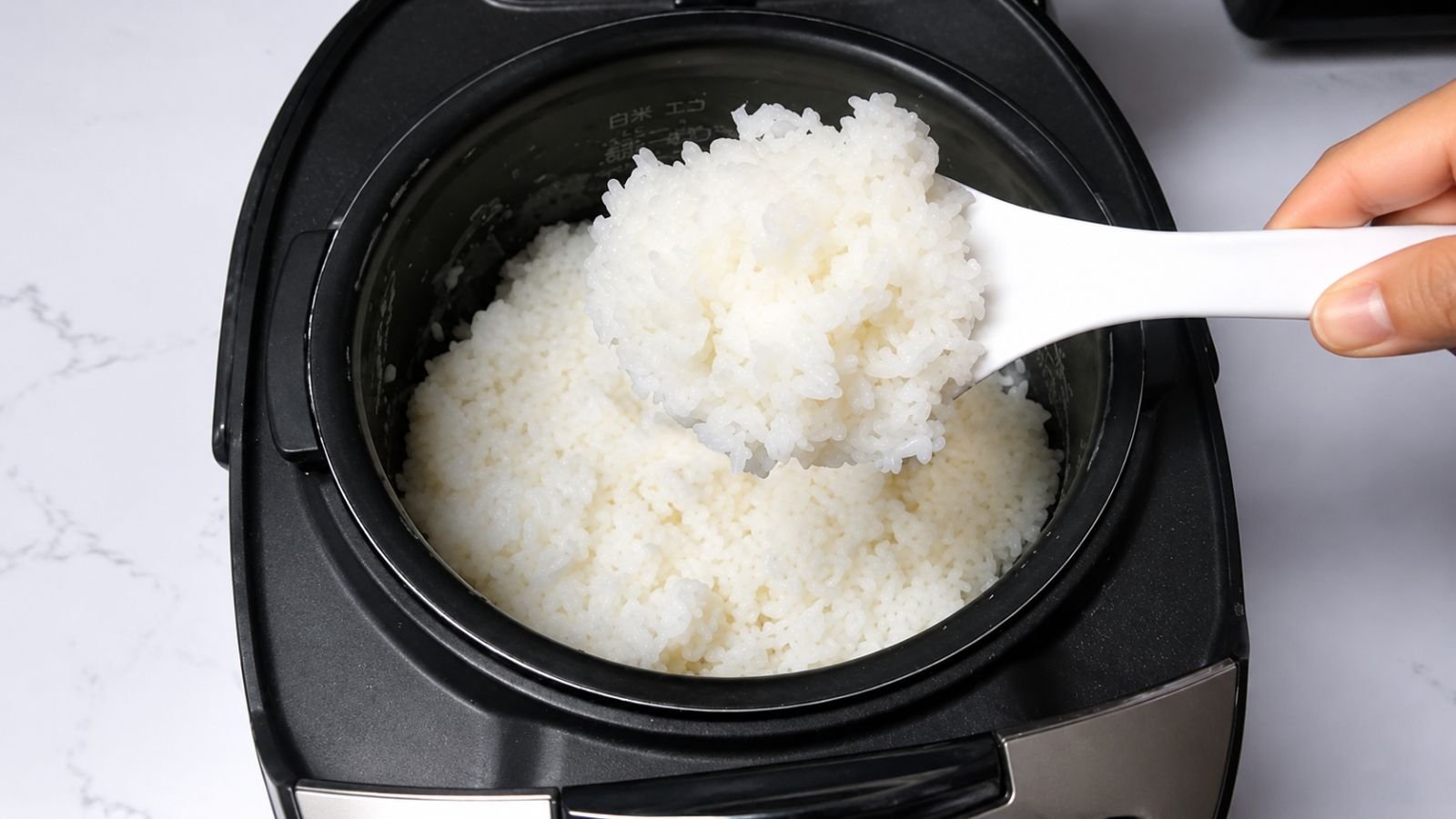
I want to be honest: using a rice cooker works much better with dry konjac rice than with the wet packaged version. Here’s the method I recommend.
Rice Cooker Method for Dry Konjac Rice
| Step | What to Do | Why It Matters |
|---|---|---|
| 1 | Rinse 160–180g of white rice 4–5 times until the water runs clear | Removes excess starch for a better texture |
| 2 | Add 40g of dry konjac rice to the washed white rice | This ratio gives a good balance of texture and flavor |
| 3 | Add clean water and soak the mixture for 30 minutes | Dry konjac rice needs time to rehydrate evenly |
| 4 | Drain thoroughly using a sieve | Removing excess water prevents the rice from turning mushy |
| 5 | Transfer to the rice cooker and add 300–350ml of fresh water | Adjust slightly based on your rice cooker and how soft you like your rice |
| 6 | Cook on the normal white rice setting | No special setting needed |
The key step most people skip is the drain after soaking. If you leave too much water in, the rice turns out soft and mushy. Draining well before you add the measured cooking water gives you a much better result.
This method also makes konjac rice much easier to eat for people who are new to it. Mixed with white rice, the texture is very close to normal rice. The flavor is the same. But you’re eating fewer calories and more fiber with every bowl.
Rice Cooker Method for Konjac Rice
| Step | What to Do |
|---|---|
| 1 | Drain and rinse konjac rice well |
| 2 | Add rinsed konjac rice to the rice cooker |
| 3 | Add a small amount of broth or seasoned water (about ¼ cup) |
| 4 | Add any vegetables, soy sauce, or spices you like |
| 5 | Use the "quick cook" or "steam" setting |
| 6 | Check after 5–8 minutes. Don’t overcook it. |
The main risk is adding too much water. Konjac rice doesn’t absorb water the way regular rice does. Too much water makes it mushy. Use much less liquid than you would with normal rice.
How to Make Konjac Rice Taste Good
This is where I want to help you the most. Because konjac rice on its own doesn’t taste like much. But cooked correctly, it can be genuinely enjoyable.
To make konjac rice taste good, treat it like a blank canvas. Dry-fry it first to remove moisture, then cook it with strong flavors — soy sauce, garlic, sesame oil, curry, or broth. The key is layering flavor, because konjac rice absorbs everything you put around it.
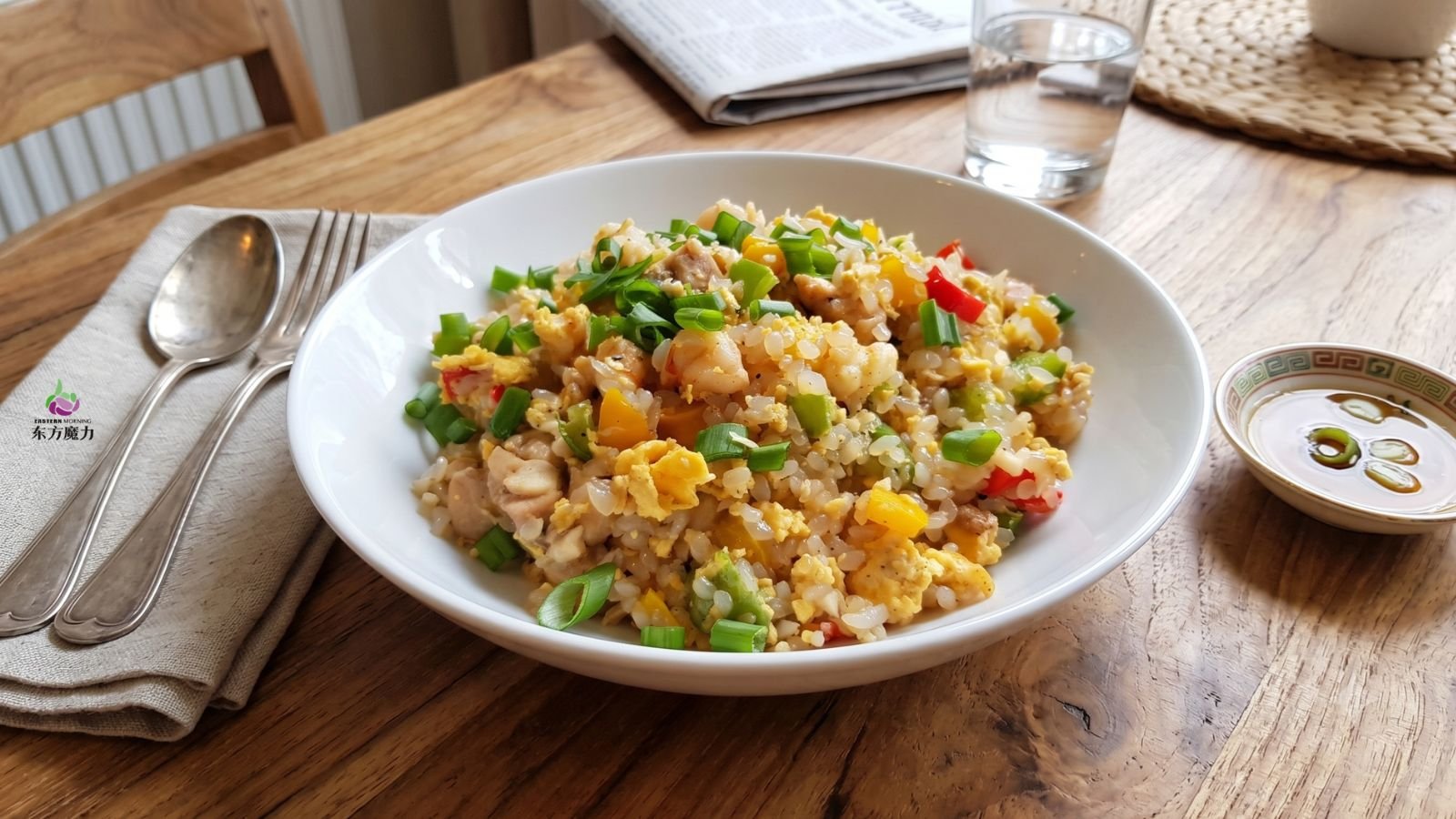
I’ll be honest — the first time I ate konjac rice, I didn’t enjoy it. I rinsed it and ate it cold next to some plain chicken. It was rubbery and bland. That was my mistake. Here’s what I do now.
Best Flavor Pairings for Konjac Rice
| Flavor Style | Key Ingredients | Dish Idea |
|---|---|---|
| Japanese | Soy sauce, sesame oil, ginger | Konjac rice bowl with salmon |
| Chinese | Oyster sauce, garlic, egg | Konjac fried rice |
| Thai | Coconut milk, red curry paste | Konjac rice curry |
| Mediterranean | Olive oil, lemon, herbs | Konjac grain salad |
| Indian | Turmeric, cumin, coriander | Konjac rice with dal |
The most important rule: always dry-fry konjac rice before adding any sauce. If you skip this step, the dish becomes watery. Once it’s dry-fried, it acts just like regular rice in a stir-fry or grain bowl. Add bold sauces and aromatics, and it becomes a genuinely satisfying meal.
Can I Eat Konjac Rice Every Day?
Once people enjoy konjac rice, the next question is: how often can I eat it?
Eating konjac rice every day is generally safe for healthy adults. It’s low in calories and high in fiber, which can support digestion and blood sugar control. However, eating very large portions daily may cause digestive discomfort in some people. Moderation and variety are recommended.
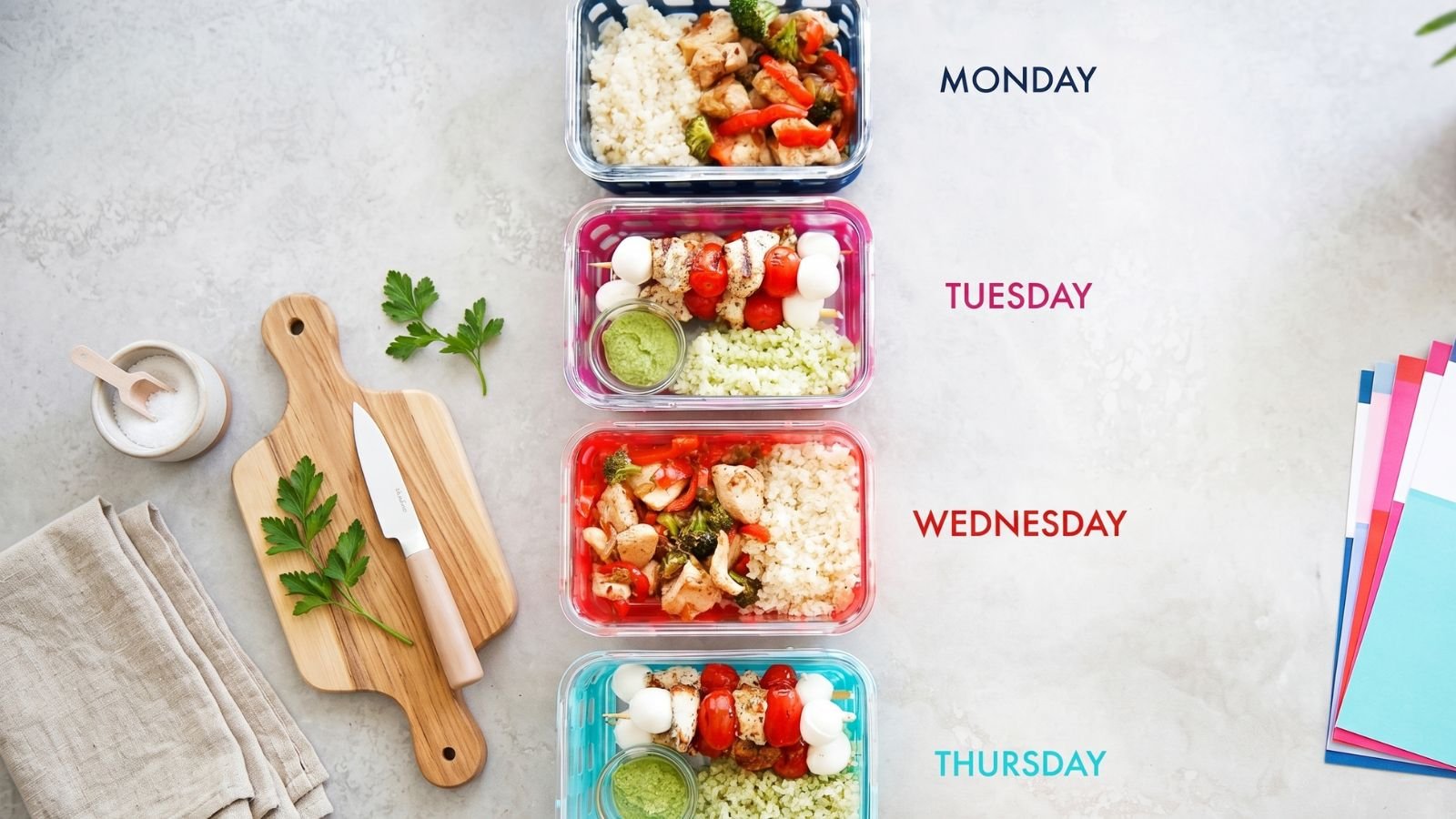
I eat konjac rice several times a week. For me, it works as a dinner substitute when I want to keep calories lower without feeling hungry. But I don’t replace every meal with it, and I don’t think you should either.
Benefits and Limits of Daily Konjac Rice Eating
| Factor | Details |
|---|---|
| Calorie control | Very helpful. One serving has around 10–20 calories compared to 130+ for white rice. |
| Fiber intake | Good for digestion. Glucomannan is a prebiotic fiber that supports gut health. |
| Nutrient density | Konjac rice has very few nutrients. You must get protein, vitamins, and minerals from other foods. |
| Digestive comfort | Too much glucomannan at once can cause gas or bloating. Build up gradually. |
| Long-term variety | Eating only konjac rice and skipping whole grains is not ideal. Include other foods. |
My advice: use konjac rice as a tool, not a total replacement. It works best when it’s part of a balanced diet, not the entire diet.
Where to Buy Konjac Rice
Finding good konjac rice can be confusing. There are many brands, many formats, and very different quality levels.
You can buy konjac rice at health food stores, Asian grocery stores, and online retailers like Amazon. Look for products with minimal ingredients — konjac flour and water — and certifications like BRC, HACCP, or FDA compliance. For bulk or private label purchasing, going directly to an OEM manufacturer offers better quality control and pricing.
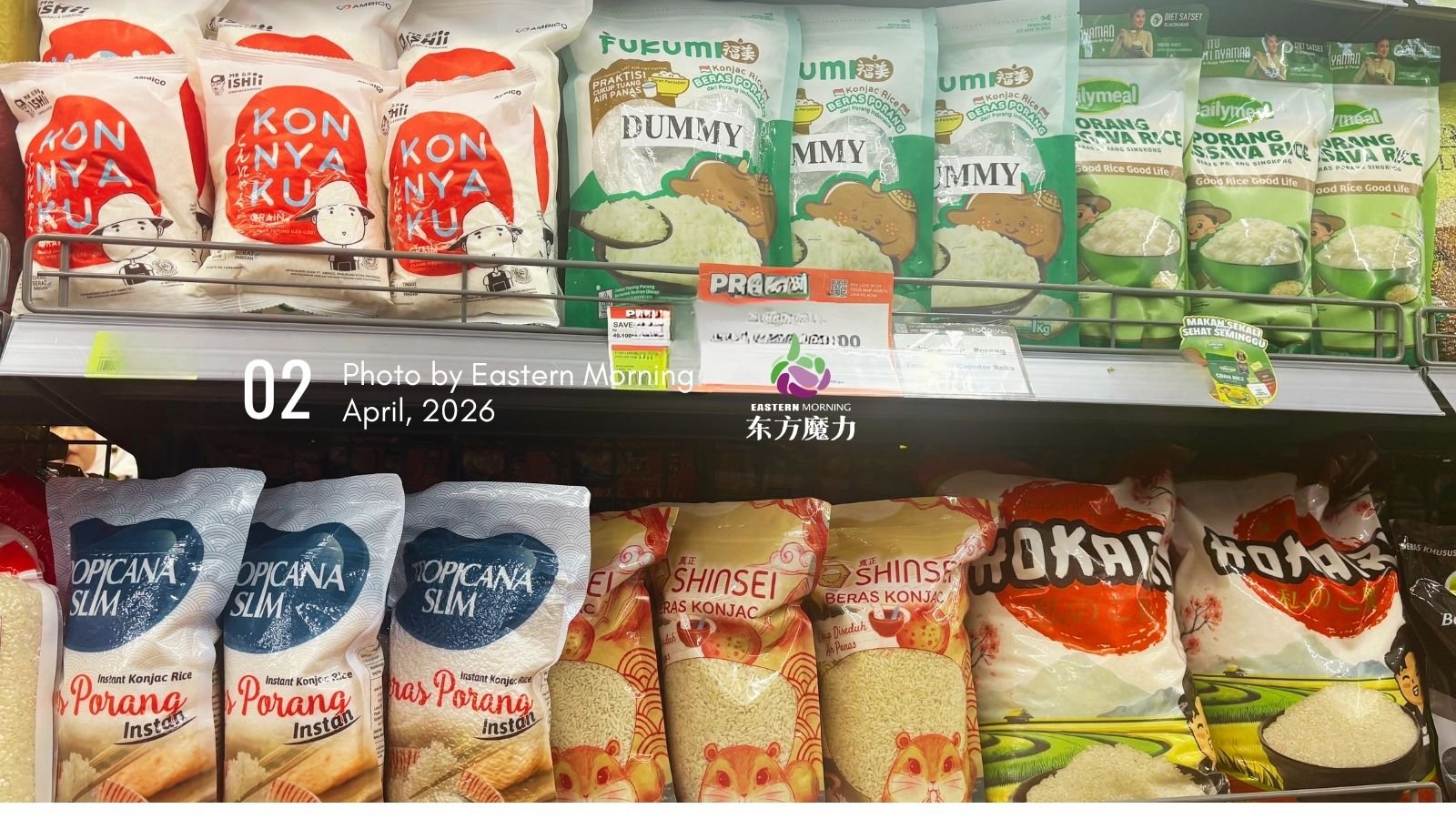
I’ve tried a lot of konjac rice brands. The quality difference is real. Cheaper products often have a stronger smell, worse texture, or inconsistent grain size. When I started buying from manufacturers who focus specifically on konjac products, the experience improved a lot.
Where to Buy Konjac Rice by Buyer Type
| Buyer Type | Best Place to Buy | What to Look For |
|---|---|---|
| Home consumers | Amazon, Whole Foods, Thrive Market, Asian grocery | Certified brands, clear ingredient list |
| Health brands / retailers | OEM manufacturers, food trade shows | Custom formulation, private label options |
| Importers / distributors | Direct from konjac food factories | BRC, HACCP, FDA, HALAL certifications |
| Foodservice buyers | Wholesale suppliers or manufacturers | Bulk packaging, consistent quality |
If you’re a consumer, Amazon and health food stores are the easiest options. If you’re a business looking to sell konjac rice products, working directly with a manufacturer gives you better control over quality, packaging, and pricing.
Final Buying Tips
Before you buy your first pack of konjac rice, there are a few things worth knowing. Bad choices here lead to bad first experiences.
When buying konjac rice, check the ingredient list first — it should only contain konjac flour and water. Look for certifications. Check the texture description and format (wet or dry). And always read reviews about the smell and rinse process, because this tells you a lot about product quality.
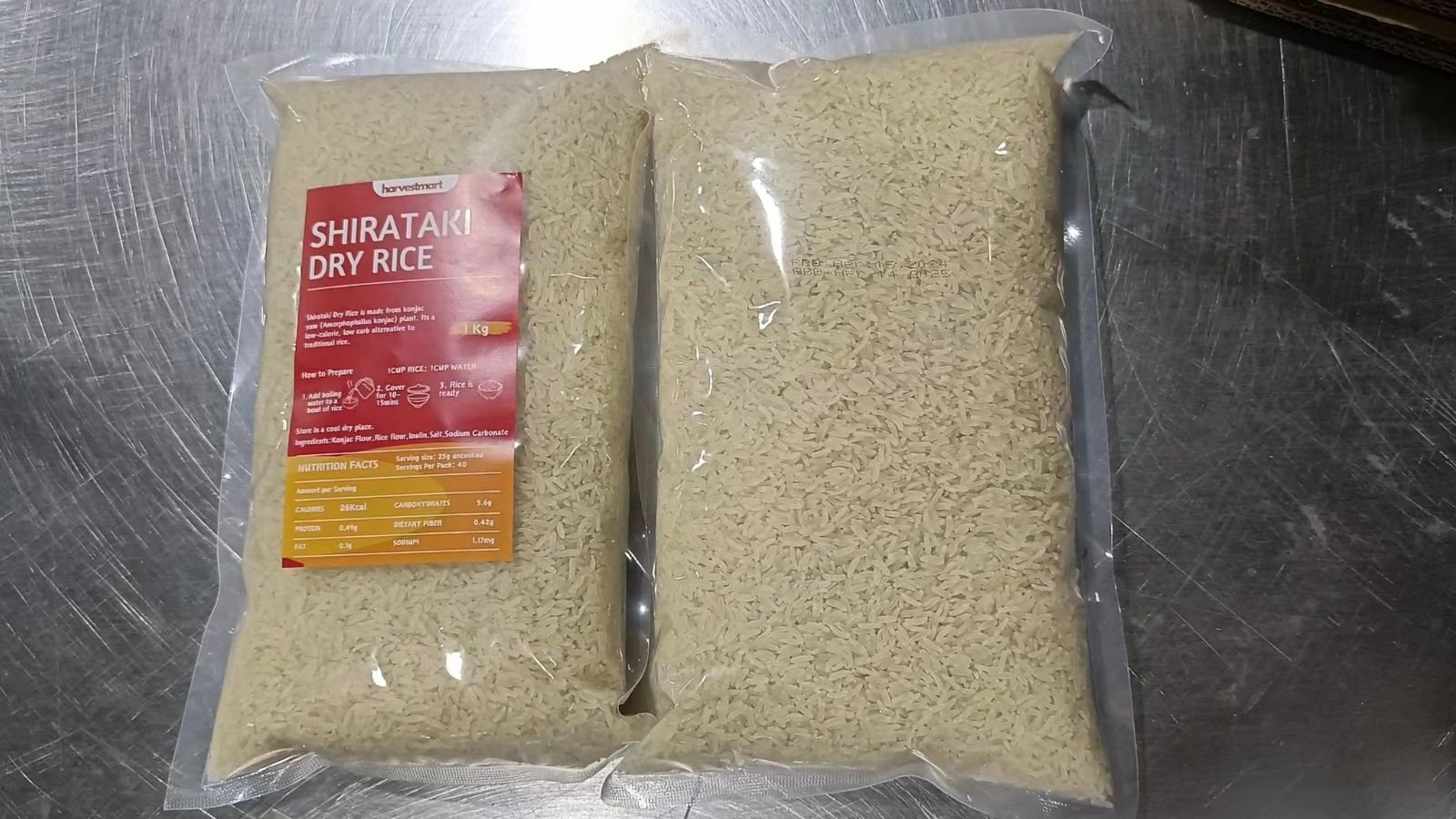
Here’s a simple checklist I use when evaluating any konjac rice product:
Konjac Rice Buying Checklist
| What to Check | What You Want to See |
|---|---|
| Ingredient list | Konjac flour (glucomannan) + water only, or minimal additives |
| Certifications | HACCP, BRC, FDA, HALAL, or other recognized food safety marks |
| Format | Wet/packaged (for convenience) or dried (for longer shelf life) |
| Smell reviews | A slight smell is normal, but should rinse away easily |
| Grain texture | Firm but not rubbery, consistent grain size |
| Brand transparency | Clear origin, factory information, and nutritional data |
For businesses, I’d add: visit the manufacturer if you can, or request samples before committing to large orders. Konjac rice quality varies a lot between factories. Certifications matter, but so does consistency from batch to batch.
Conclusion
Konjac rice is safe, versatile, and easy to cook once you know how. Rinse it, dry-fry it, and add bold flavors — and it works beautifully in almost any dish.